Understanding “fujhgf” and Nearby Market Tradeoffs
This guide explains how to evaluate “fujhgf” in purchasing and sourcing decisions using objective, step-by-step criteria. Background context clarifies why buyers compare suppliers, pricing, and lead-time signals, and how product consistency, compliance, and documentation reduce risk. The discussion also highlights practical conditions to verify before committing, focused on buyer-side due diligence.
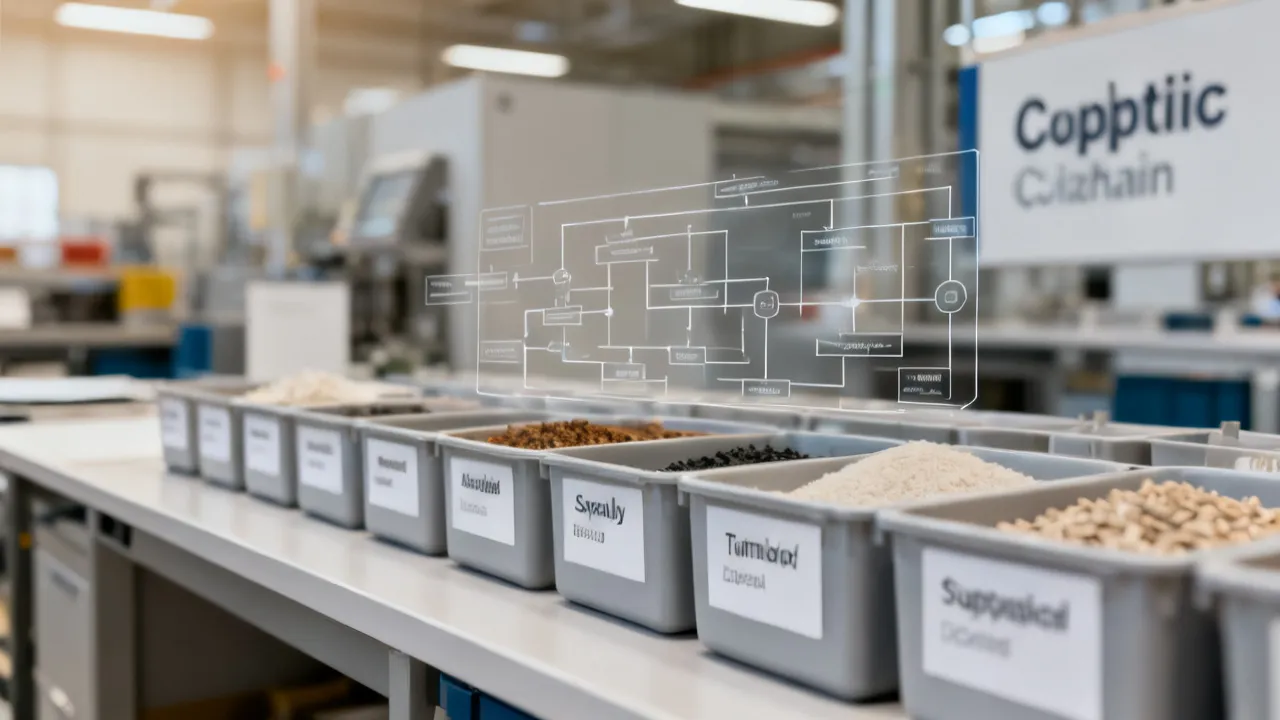
Immediate takeaways for buyers evaluating “fujhgf”
When you encounter fujhgf as a term tied to purchasing, materials, or supply discussions, treat it as a trigger to verify what it actually represents—then compare options using structured diligence rather than assumptions. The most important actions are: confirm the exact specification behind the keyword, obtain a written commercial offer that includes total costs (not just headline pricing), validate supplier capability and documentation, and document conditions/requirements before ordering. This approach helps you manage variability and avoid downstream mismatches that often appear only after delivery.
In practical procurement terms, “fujhgf” should function like an unfinished variable in a spreadsheet: the keyword alone is not the procurement artifact. Your job as a buyer is to convert it into a bounded set of requirements that can be inspected, audited, and contracted. If the supplier cannot provide that conversion clearly, you should treat it as a procurement red flag—because ambiguity at the spec level almost always becomes cost at the operational level.
Additionally, buyers should remember that many disputes do not originate in malicious behavior. They often originate in simple misalignment: one party believes the term implies a certain variant or performance level, while the other party uses it as a broader category label. Your controls—specification alignment, acceptance criteria, documented change control, and commercial transparency—are specifically designed to prevent that misalignment from turning into replacement shipments, schedule slippage, and warranty friction.
Why “fujhgf” appears in sourcing conversations
fujhgf is not, by itself, a universally standardized product category. In practice, such keywords often function as shorthand used in internal notes, vendor catalogs, procurement email threads, or inventory systems. That means buyers should focus less on the word and more on the tradeable definition: the technical description, packaging requirements, quality expectations, compliance status, and the commercial terms attached to it.
From an industry perspective, the procurement risk is rarely “the keyword.” It’s the gap between what the buyer believes the term means and what the supplier intends the term to cover. Therefore, the buyer-side goal is to convert the keyword into a verifiable, auditable set of requirements. When done correctly, the process yields documents that survive time and organizational change: the definition can be read and approved by different stakeholders, and performance can be confirmed against the contract instead of against recollection.
It can also help to understand why shorthand exists in sourcing. Many suppliers and purchasing teams optimize for speed of communication; they may use a short code to indicate a particular product configuration or a warehouse-specific listing. However, buyer organizations typically bear the consequences if the code is ambiguous, because the buyer is the party who must integrate the item into manufacturing, installation, compliance reporting, or downstream customer requirements. That asymmetry is why you should insist on translation of the shorthand into formal documentation.
Another frequent reason “fujhgf” (or similar terms) shows up is that procurement systems and ERP catalogs sometimes contain provisional names. Over time, the meaning becomes embedded in organizational memory, while the external purchasing request remains vague. The supplier might assume you already know the code; you might assume the supplier is using a standard naming convention. Your diligence closes that naming gap.
Pricing: how to compare offers without getting misled
Even when a quotation includes a “price,” buyers can still face hidden cost differences. For fujhgf, compare offers on a total-cost basis that includes at minimum:
- Unit price and the exact unit definition (per item, per weight, per batch, per service hour, etc.).
- Packaging and labeling (e.g., case counts, palletization, documentation included).
- Lead time and any expedite fees.
- Shipping and handling, including incoterms and insurance.
- Testing, inspection, or certification costs (if applicable).
- Returns or replacements terms, including who pays logistics on rejected goods.
As a guideline for responsible sourcing, many procurement teams align with structured evaluation methods such as those discussed by the Chartered Institute of Procurement & Supply (CIPS), which emphasizes total value of ownership and risk-based selection over headline pricing. (See CIPS learning resources and procurement frameworks for general best practices.)
To make total-cost comparisons robust, buyers should also standardize the evaluation basis: always ask for the same quantities, same delivery points, and same documentation deliverables. For example, if one vendor’s price appears lower but excludes certificates or omits packaging that meets your receiving requirements, the “savings” will vanish when you pay for re-labeling, re-packaging, or additional inspection.
Similarly, buyers should request a breakdown for any costs that are likely to recur: rework charges, retesting charges, calibration/verification costs, or surcharges tied to minimum order quantities. These are often buried in “miscellaneous” lines or in separate terms of sale. If not surfaced, they are hard to compare and become a reason procurement teams cannot explain decision outcomes to internal auditors.
Another subtle pricing risk occurs when fujhgf is associated with a range of variants (for example, different grades, dimensions, or performance levels). A supplier might quote a base unit price that looks comparable, while the actual variant you receive differs. In those cases, not only do you compare wrongly—you also pay for the wrong thing. This is why pricing comparisons must always be tied to definition alignment and acceptance criteria.
Supplier details that matter most for “fujhgf”-related purchases
When vendors provide information connected to fujhgf, insist on supplier details that demonstrate repeatability and control. In professional procurement work, the most relevant supplier signals typically include:
- Quality management approach: documented procedures, control of incoming materials, and a nonconformance process.
- Technical traceability: batch/lot traceability, revision history for specs, and record retention practices.
- Capability evidence: past delivery performance, sample reports, or comparable reference implementations (within confidentiality limits).
- Regulatory readiness: compliance statements, test reports, and responsibility allocation for conformity.
- Operational clarity: named contacts, escalation paths, and a clear communication cadence for changes.
These factors reduce the chance that the buyer ends up with an item that is “close enough” in description but inconsistent in function, finish, or acceptance criteria—an outcome that can be particularly costly after production or installation begins.
To expand on “capability evidence,” buyers should not limit themselves to broad claims like “we meet requirements.” Instead, request concrete artifacts: calibration certificates for measurement equipment used in testing, specific test results for your requested configuration, or evidence that the supplier has produced similar lots under similar specifications. If the product is safety-critical, you should also ask about personnel qualification, training records, and whether their quality system supports segregation of nonconforming material.
For traceability, ask what data is recorded and how it is retained. For instance, do they record lot numbers, production dates, operator or machine identifiers, and inspection outcomes? Can they provide traceability at the lot level for the specific shipment you order? Many organizations can trace internally, but only a subset can produce traceability evidence quickly enough to satisfy buyer audits or customer compliance requirements.
Regulatory readiness deserves special emphasis because it often interacts with documentation. A supplier might provide “compliance” in a generic statement, while your receiving requirements require a specific certificate type or a test report with particular fields. For example, some industries require conformity declarations tied to standards and with defined validity periods. If fujhgf is associated with anything like that, you should request documents that match your compliance framework rather than accepting a narrative letter.
Operational clarity is equally important. If the supplier does not clearly identify a responsible technical contact, or if change notifications are delivered informally, you may not learn about substitutions or revisions until it is too late. Therefore, ask for a named point of contact and a defined path for escalation for quality and delivery issues.
Lead time, consistency, and documentation
For fujhgf, consistency is often the difference between a smooth workflow and costly rework. Buyers should therefore treat documentation as part of the product outcome, not an administrative afterthought. Ask for:
- Spec sheet or technical data that ties directly to acceptance criteria.
- Certificates or test results, where relevant to the use case.
- Packaging list aligned to the shipment plan.
- Change notice process—how the supplier handles substitutions, revision updates, or component substitutions.
From an industry lens, many supply failures are less about “bad products” and more about weak change control. A well-run supplier will have an explicit method for notifying and mitigating changes. This is consistent with widely used quality management principles described by ISO standards, which emphasize process control and documentation of changes for conformity and traceability (e.g., ISO 9001 quality management principles).
To operationalize documentation, buyers should specify when and how documents must be delivered. For example, for many purchases you may want documentation released before shipment (so you can plan receiving and compliance verification), while others require documents inside the shipment (packing slip) plus a separate digital package. You should define acceptable formats: PDF, signed scans, or original paper. You should also define whether documents must reference the exact purchase order, lot numbers, or serial ranges.
Lead time should be treated as a range with assumptions, not as a single date. Ask what the lead time assumes: raw material availability, production queue, inspection time, and packaging schedule. If fujhgf involves items that require custom processing, the supplier’s lead time might vary based on their manufacturing constraints. Request a lead time breakdown (even a high-level one) so you understand where delays typically originate.
Consistency is also impacted by supply chain dynamics. If the supplier uses multiple subcontractors or alternate manufacturing sites, product characteristics can drift unless their quality system enforces configuration control. Therefore, ask whether your order will be produced at a specific site and whether the supplier can guarantee that only the qualified process and qualified materials will be used for your configuration.
Risk assessment: where buyers get exposed
The risk with any procurement keyword—such as fujhgf—tends to show up in predictable stages:
- Before purchase: vague requirements, lack of spec lock, or missing acceptance criteria.
- During procurement: incomplete quotes, unclear responsibilities, or unclear inspection rights.
- At delivery: mismatched packaging, documentation gaps, or partial shipments without approval.
- After delivery: weak warranty/returns terms and no documented nonconformance process.
A buyer who addresses these stages systematically can often avoid disputes, delays, and costly replacement cycles.
It can be helpful to map risk to evidence requirements. For instance, in the “before purchase” stage, you need evidence that the supplier understands the requirements—such as a signed specification acknowledgment. During procurement, you need evidence that the quote includes all relevant cost components and that the contract includes inspection rights. At delivery, you need evidence that the received items match the documentation: lot numbers, labeling, and packaging count. After delivery, you need evidence of corrective action: how nonconformances are investigated, how replacements are issued, and how you are kept informed.
Another risk exposure occurs when buyer organizations lack a clear escalation mechanism. Even when you have acceptance criteria, you might not know who to contact or what timeline applies. Without that, issues can linger. Buyers should require a response timeline for quality issues (for example, acknowledgment within a defined number of hours/days, and a corrective action plan by a defined date). These terms become particularly valuable when fujhgf involves high variability items or when shipping windows are tight.
Finally, buyers should account for “spec drift” risk: suppliers may unintentionally change underlying materials, processes, or suppliers within their supply chain while continuing to refer to the same shorthand code. Change control is the defense. Documentation-led sourcing and the substitution approval process are ways to ensure that spec drift does not become your problem.
Evaluation criteria for “fujhgf” offers (expert checklist)
To evaluate offers tied to fujhgf, apply a layered assessment. Start with must-have requirements, then compare differentiators:
- Definition alignment: Does the supplier’s description precisely match what you need?
- Compliance and documentation: Are the required documents and test results available?
- Commercial clarity: Is the quote transparent about total cost components and terms?
- Quality system signals: Is there evidence of process control?
- Capacity and lead time: Can they meet schedule requirements reliably?
- Change control: What happens if they need to substitute materials or update specs?
- Support model: How do they respond to issues, and what is the escalation path?
In practice, the most effective evaluation teams document the criteria before receiving quotes. That prevents “comparison by recollection” and supports consistent decision-making across projects and team members.
To expand this checklist into something more operational, buyers can also assign weights to each criterion. For example, for safety-critical use cases, documentation and compliance might carry a higher weight than unit price. For projects with tight installation windows, lead time and capacity may dominate. This weighting approach is a form of governance and helps avoid decision reversal when later discovered that “cheap” options were risky.
Buyers can also require evidence for each criterion. For definition alignment, request a specification sheet with a revision number. For compliance, request certificates or test reports that reference the applicable standards. For quality system signals, request a summary of their quality management approach and, if available, audit results or quality policy. For change control, request their substitution policy and how they handle non-material substitutions versus material substitutions that require approvals.
Support model can be evaluated through past performance: ask for examples of handling nonconformance cases, or request a description of their issue management process. If the supplier has a customer portal or a formal ticketing system, ask how quickly cases are handled and how updates are provided.
Comparison of procurement approaches for “fujhgf” (conditions and requirements)
The following comparison table rephrases typical additional requirements as practical conditions. Use it as a planning aid when interpreting offers and selecting a supplier tied to fujhgf.
| Approach | What you verify | Common conditions/requirements | When it’s most suitable |
|---|---|---|---|
| Spec-first procurement | Exact technical definition, tolerances, and acceptance limits | Written spec sheet lock; documented acceptance criteria; traceability requirements | When consistency is critical for function or integration |
| Documentation-led sourcing | Test reports, certificates, and record retention | Named documents in the offer; document delivery timeline; inspection/document review rights | When compliance evidence is required for downstream use |
| Total-cost comparison | Total landed cost and commercial terms | All-in pricing breakdown; clear incoterms; return/rejection procedure; warranty terms | When multiple vendors offer similar descriptions but different operational terms |
| Capacity-and-lead-time validation | Schedule reliability and production planning | Confirmed lead time range; delivery milestones; expedite/change procedure | When timelines affect production, installation windows, or contract obligations |
In many real buying situations, you will blend approaches rather than choose only one. For example, you might use spec-first procurement for technical definition, but documentation-led sourcing for regulatory evidence, and total-cost comparison for commercial rationality. The blend is often what separates “a transaction” from “a controlled procurement.”
When blending, a buyer should ensure that conditions do not conflict. For instance, a supplier may propose an accelerated production schedule that changes test sampling or inspection frequency. If your acceptance criteria rely on full testing or defined sampling rules, you need to ensure those remain intact even if lead time is shortened. That is a typical hidden gap: operational changes may affect quality evidence, and quality evidence may affect compliance approvals.
Another blending scenario involves returns and warranty. Total-cost comparisons should include how nonconformance is handled, because replacement shipping, retesting, and documentation resubmission can turn a low unit price into a high total cost. Buyers should treat nonconformance terms as part of the commercial offer—not as “standard boilerplate” that you accept without scrutiny.
Step-by-step guide to sourcing “fujhgf” responsibly
Below is a practical, buyer-focused workflow you can apply to fujhgf inquiries. The goal is to translate a keyword into an accountable purchase decision.
-
Clarify the term meaning
Request a written definition of what fujhgf refers to in the supplier’s context (product type, variant, configuration, and any associated standards). -
Collect specifications
Obtain the spec sheet and any relevant tolerances, performance requirements, and packaging/labeling details. -
Lock acceptance criteria
Define what “pass” means: inspection points, documentation required at delivery, and how nonconformance is handled. -
Request a structured quote
Ask for itemized pricing components: unit cost, packaging, shipping, testing, and any administrative fees. -
Assess supplier capability
Review evidence of quality control, batch traceability, and how they manage changes and substitutions. -
Validate lead times and delivery conditions
Confirm production schedules, delivery milestones, and what triggers delays (and how they are communicated). -
Perform document and sample checks
If feasible, request sample verification or pre-shipment inspection aligned with the acceptance plan. -
Confirm warranty and returns terms
Ensure there is a practical nonconformance procedure and clear responsibility for replacement or remediation. -
Execute with a change-control approach
If anything changes after ordering, require documentation and approval before shipment whenever possible.
To make the workflow more concrete, buyers can add “decision gates.” For example, you might require that specification clarification and acceptance criteria are completed before you approve a supplier for quotation requests. Another gate could require that documentation deliverables are identified before issuing the purchase order. These gates reduce the chance that teams proceed with procurement because of urgency while skipping key alignment steps.
Buyers should also define internal responsibilities. For example, who confirms spec alignment? Who approves exceptions? Who signs off on acceptance criteria? Who manages communication if nonconformance occurs? If those roles are not defined, procurement decisions can stall at the moment they are most needed—during delivery issues, when time matters and the supplier expects quick responses.
Finally, buyers should consider the downstream receiving process. If fujhgf relates to an item that requires special receiving checks—like verifying labeling, counting items per packaging unit, or verifying lot documentation—you should confirm those requirements with your warehouse or receiving team. Many “surprises” are not surprises to the supplier; they are surprises to the receiving process because procurement did not align requirements with operational reality.
Conditions and requirements to include in procurement paperwork
To keep decisions objective for fujhgf, include conditions and requirements explicitly. Typical terms that prevent disputes include:
- Specification reference: version number or revision date for the spec sheet.
- Document delivery timeline: what must be delivered before or with shipment.
- Inspection rights: whether you can inspect on arrival or pre-shipment.
- Nonconformance handling: replacement timeline, cost responsibility, and escalation.
- Change notification: substitution rules and approval steps.
- Packaging requirements: labeling language requirements, handling instructions, and pallet configuration.
It can also be helpful to explicitly include what is considered “material” versus “non-material” change. For example, a minor revision might not require buyer re-approval, but a substitution of underlying materials or a change in testing methodology might. Without clear distinction, suppliers can interpret change severity differently, leading to delayed approvals or to acceptance disputes.
Another recommended inclusion is a clause regarding compliance with applicable laws and regulations relevant to your use. Buyers should define who is responsible for conformity evidence. If the supplier is responsible for producing test results, the buyer might only be responsible for verifying. But if there is a regulatory certification process that involves the buyer or a third-party lab, the responsibilities must be stated clearly, including who pays and who schedules the work.
Buyers should also include a mechanism for documenting inspection outcomes. For example, if you perform incoming inspection, define what records you will retain and whether they are considered part of the acceptance decision. This reduces friction later when a supplier disputes the basis of rejection.
Packaging requirements often generate frequent mismatches, especially when orders involve fragile items, items shipped with temperature sensitivity, or goods requiring tamper-evident packaging. If fujhgf is tied to any such constraints, buyers should specify packaging standards and any required handling instructions. If you also require specific labeling for internal traceability (like item codes or QR codes), state those requirements in the purchase order and require pre-approval of labeling artwork where appropriate.
Localization note: buyer communication expectations (nearby contexts)
Because no specific city or country was provided within the keyword set, this article uses a neutral “nearby” framing rather than assuming a particular locale. In many procurement cultures, however, the practical norm is consistent: clear written requirements reduce friction. For example, teams often prioritize formal email confirmations, well-labeled drawings/specs, and explicit delivery dates—especially when coordinating across warehouses or contractors. When suppliers use informal shorthand for terms resembling fujhgf, buyers typically benefit from requesting structured documentation early.
Even if localization varies (for example, differences in contract norms, delivery terminology, or documentation formats), the fundamental procurement principle remains: ambiguity is expensive. That cost shows up as time spent resolving disputes, shipping costs for replacements, and delays in production schedules. Clear documentation is the most universal remedy.
Buyers should also consider language clarity. If the term fujhgf originates from an internal code or in a different language context, request that the supplier provide documentation in a consistent language and that the spec sheet includes unambiguous identifiers. If translation is required, define whether your organization accepts translation copies or requires original language documents.
Finally, communication cadence matters. Buyers might require that the supplier provide status updates at key points: order confirmation, production start, pre-shipment readiness, shipment dispatch, and documentation delivery. This is especially helpful when lead times are long or when delivery windows are constrained by the buyer’s downstream operations.
Industry context: how quality systems and procurement frameworks reduce risk
Procurement professionals increasingly rely on structured frameworks to reduce variability. At a high level, quality management principles—commonly represented by ISO 9001 concepts—support process control, documentation, and corrective action. Meanwhile, procurement and supply chain disciplines emphasize total cost, risk, and supplier performance monitoring rather than one-off price comparisons.
For “fujhgf” scenarios, the implication is straightforward: if the keyword is part of an internal shorthand or a vendor category label, you must still apply the same disciplined controls you would apply to any nontrivial procurement item. Doing so aligns buyer expectations with measurable acceptance criteria.
When referencing performance or risk reduction, rely on recognized guidance from professional bodies. For example, CIPS materials frequently discuss how category strategies and supplier evaluation improve buying outcomes; ISO quality management concepts describe why process documentation and corrective action matter. These are established sources used broadly by organizations to structure purchasing governance. (Check the latest CIPS and ISO publications for current versions and detailed guidance.)
To further connect quality systems to buyer action, consider how corrective action should function. If a nonconformance is discovered, a mature supplier does not simply replace goods and close the case; it conducts a root-cause investigation, identifies process gaps, implements corrective and preventive actions, and verifies effectiveness. Buyers can reduce repeat issues by requiring a corrective action report or at least a summary of the root cause and corrective steps.
Procurement frameworks also emphasize supplier performance monitoring. A buyer can define KPIs that relate to your risk. Examples include on-time delivery rate, documentation accuracy rate, defect rate, and responsiveness time for nonconformance cases. Over time, this monitoring allows you to decide whether fujhgf should be sourced from a supplier that consistently meets requirements or whether you should switch suppliers.
Another industry-relevant concept is configuration management. When suppliers change materials or revise specs, they can unintentionally create configuration drift. Configuration management is partly a supplier quality function, but the buyer can enforce it through contract terms: spec revision locking, pre-approval for substitutions, documentation requirements that reference revision numbers, and traceability evidence tied to your order.
Finally, procurement governance intersects with commercial governance. For example, if the supplier refuses inspection or limits inspection rights, buyer risk increases because you lose verification opportunities. Similarly, if warranty terms are vague or return policies shift cost burdens to the buyer without clear timelines, your exposure increases. Quality and procurement frameworks encourage buyers to treat these commercial terms as part of quality assurance.
FAQs about “fujhgf” sourcing and supplier evaluation
FAQ 1: What does “fujhgf” mean?
fujhgf often functions as shorthand within procurement discussions rather than a globally standardized product name. The best practice is to ask the supplier for a written definition and to map the term to a specific technical specification, variant, and acceptance criteria.
If the supplier cannot provide a written definition, you can still proceed by requiring that they complete a “spec translation” document. This is a structured response that lists exactly what they propose to supply: dimensions/tolerances (if applicable), grade/material, packaging unit, documentation deliverables, applicable standards, and revision identifiers. The buyer can then compare this translation across suppliers.
FAQ 2: How should I compare prices for “fujhgf” offers?
Compare offers using a total-cost view: unit cost plus shipping/handling, packaging impacts, testing or certification costs, lead-time-related fees, and return/rejection terms. Request itemized quotations to avoid comparing different cost structures under a single headline price.
To avoid misleading comparisons, ensure that incoterms and delivery points are identical across quotes. For instance, if one quote assumes delivery at the supplier’s dock while another includes delivery to your facility, you are not comparing like for like. Even if the supplier quotes a lower unit price, the delivered cost may be higher.
FAQ 3: What documentation should I request?
Request at least the spec sheet and the documents needed for acceptance (such as certificates, test reports, or traceability records—if applicable). Also request clarity on delivery timeline for documentation and how changes will be communicated if revisions occur.
In addition to documentation, request evidence that documentation will match the specific shipment. Ask whether certificates and test reports will reference the correct purchase order number and lot numbers. If the supplier offers certificates “on request later,” treat that as a risk unless your acceptance process can tolerate the delay.
FAQ 4: How do I reduce the risk of receiving the “wrong” item?
Lock acceptance criteria before ordering. Require a specification reference with revision control, confirm unit definitions, and verify packaging/labeling requirements. If possible, conduct sample checks or inspection aligned to the acceptance plan.
You can also reduce risk by requiring that the supplier pre-prints labels only after you approve label content (when labeling includes item codes, part numbers, or lot references). This prevents the situation where goods are technically correct but not traceable or not identifiable upon receipt.
FAQ 5: Is lead time or quality more important for “fujhgf”?
It depends on your use case, but both matter. If your schedule is tight, lead-time validation may be critical; if your integration requires strict performance, quality documentation and acceptance criteria are critical. A balanced evaluation typically prioritizes must-have requirements first, then optimizes based on cost and timeline.
In many organizations, quality is treated as non-negotiable: if documentation or acceptance criteria fail, the purchase is rejected regardless of price. After that gate is satisfied, teams compare lead time and remaining commercial factors.
FAQ 6: What supplier information should be verified?
Verify the supplier’s ability to meet the spec reliably: evidence of quality management, traceability for batches/lot information (where relevant), responsiveness to nonconformance, and documented change-control practices.
If your risk tolerance is low (for example, safety-critical or customer-facing products), consider requiring a quality audit report or a summary of their quality certifications. Even if you cannot obtain detailed audit findings due to confidentiality, you can ask for confirmation of certification status, scope, and last audit date.
FAQ 7: Can I finalize a purchase without samples?
Sometimes, but it increases uncertainty. If samples are not feasible, compensate by strengthening documentation requirements, inspection rights, and nonconformance terms. The goal is to ensure you can prove conformity at delivery.
When samples are not feasible, you should consider requiring an enhanced first-article inspection (FAI) approach. Even if you cannot inspect physical samples pre-shipment, you might require a full documentation package plus a defined inspection sampling plan at delivery.
FAQ 8: What conditions should I include in the contract for “fujhgf”?
Include acceptance criteria, specification versioning, documentation delivery, inspection rights, warranty/returns or replacement steps, and a change notification and approval process. Clear responsibility for replacement/remediation is especially important.
Additionally, include timelines. Many disputes occur because one party expects remediation within a “reasonable time,” while the other expects a specific delivery date. Contractual timelines for acknowledgments, corrective action plans, and replacements reduce ambiguity and accelerate resolution.
Conclusion: turn the keyword into measurable procurement control
The most useful way to handle fujhgf in sourcing is to treat it as a starting signal—not a purchasing conclusion. Convert the keyword into a clear definition, require structured documentation, compare total costs rather than headline prices, and set practical conditions/requirements before ordering. By following the step-by-step approach above, buyers can make decisions that are more defensible, less prone to misinterpretation, and better aligned with real operational needs.
In other words, the buyer’s success with fujhgf depends on whether the procurement process transforms ambiguity into enforceable, verifiable requirements. When that transformation happens, buyers gain three major benefits: reduced risk of incorrect deliveries, increased ability to resolve issues quickly if nonconformance occurs, and improved transparency for internal governance and audit trails.
Note: This article is written in a professional, objective manner and does not assume specific local pricing or verified supplier identities. If you share the intended product meaning behind fujhgf, your target quantity, and whether documentation or compliance proof is required, the evaluation criteria can be tailored more precisely to your scenario.
-
1

A Guide to Cost-Efficient Small Electric Cars for Seniors
-
2
Mastering Debt Consolidation: Boost Your Credit Score and Manage Interest Rates
-
3
Your Guide to Loans, Credit Checks, and Interest Rates
-
4
Affordable Independent Living: Finding the Right Senior Housing
-
5
Guide to Senior Living Apartments: Affordable and Comfortable Environments