Understanding O5765317316 for Supplier and Pricing Clarity
This guide explains how to interpret the code “O5765317316” and connect it to supplier terms, pricing logic, and procurement readiness. Objectively, the keywords and identifier format reflect how manufacturers and distributors manage inventory, traceability, and quote verification in industrial sourcing workflows.
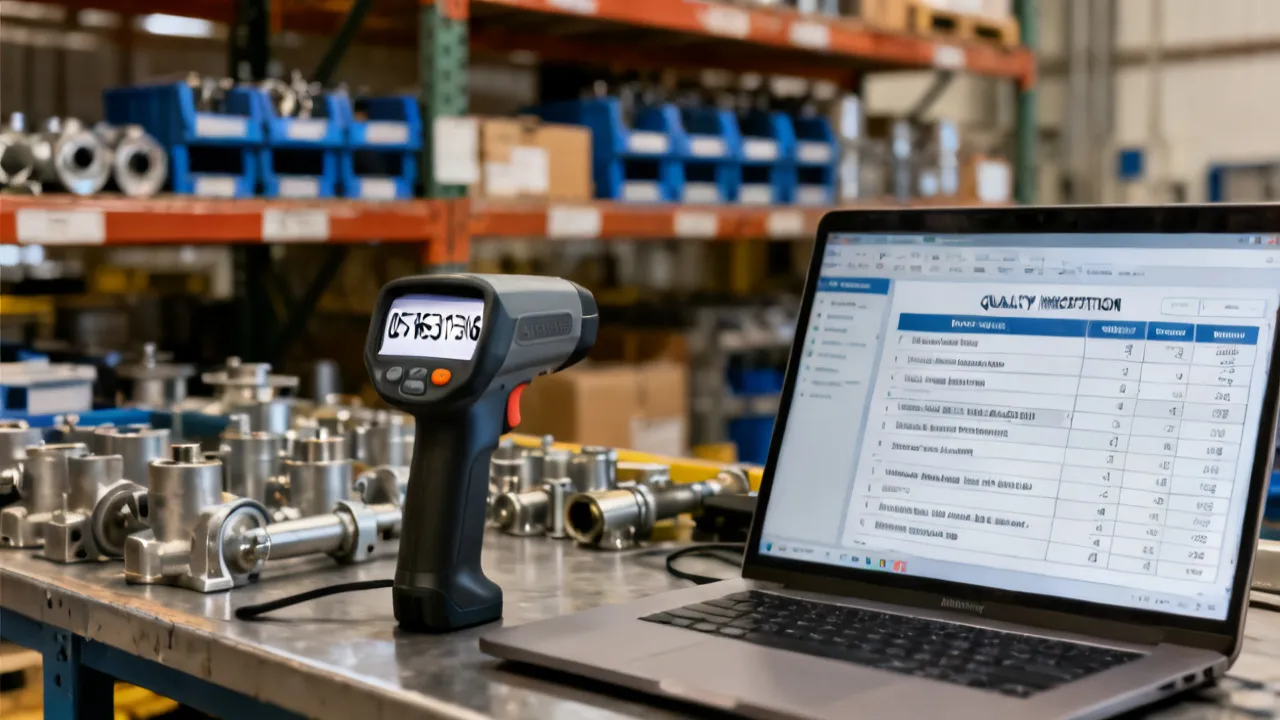
Priority overview: what O5765317316 signals for procurement decisions
When you encounter O5765317316 in sourcing or procurement documents, treat it as a traceable identifier used to align product specifications, inventory records, and quote validity. In practical terms, it helps buyers confirm that the supplier is referencing the same item, revision, and compliance documentation—before you commit to lead times or unit costs.
Because pricing in industrial purchasing is often conditional (MOQ tiers, incoterms, packaging requirements, inspection levels, and payment terms), the most critical step is to ensure the identifier is mapped to the exact supply scope in the quote. That is where code-driven clarity reduces the risk of mismatched items, unexpected surcharges, or delayed acceptance testing.
Procurement teams that move quickly often feel tempted to treat identifiers as “just numbers” and proceed to order. However, experienced teams know that the identifier usually acts as the supplier’s bridge between multiple internal systems: engineering revisions, manufacturing work orders, quality record numbers, packing instructions, and the line items that appear on commercial documents. If you rely on assumptions—such as “it’s the same product line so it’s effectively the same”—you may not notice a change until the receiving inspection fails, the documentation bundle is incomplete, or an engineering sign-off is required after the fact.
Therefore, the priority of O5765317316 is not merely administrative. It should be handled as a procurement control point: verify mapping, reconcile pricing scope, and ensure the documents and acceptance criteria are aligned to that identifier.
Industry context: why supplier identifiers matter in modern sourcing
In industrial procurement, identifiers such as O5765317316 commonly function as internal catalog references or lot-/spec-aligned codes. Buyers typically need three confirmations at once:
- Specification alignment: the quoted item matches your technical requirement.
- Traceability: the supplier can show the relevant manufacturing batch/record or document set.
- Commercial alignment: the price you see corresponds to the same scope (quantity, packaging, compliance bundle, and delivery conditions).
From an expert procurement perspective, these identifiers are not mere labels; they act as the “glue” between technical intake (engineering specs), commercial intake (quotes), and operational intake (receiving, QA, and documentation).
To understand why this glue matters, consider how industrial purchasing is actually executed across the enterprise:
- Engineering defines the functional and technical requirements (materials, dimensions, tolerances, performance criteria, revision requirements, and any special test methods).
- Purchasing negotiates commercial terms (pricing, MOQs, lead times, incoterms, payment schedule, and service level commitments).
- Quality determines what evidence is required (certificates of conformance, inspection reports, test results, traceability documentation, and sampling plans).
- Operations/Warehouse executes receiving checks, labeling verification, and inventory system entry.
- Finance/Compliance ensures that the purchase order and invoices match the approved documentation scope and that any compliance requirements are satisfied.
If any one of these functions interprets the procurement request differently—especially when multiple variants or revisions exist—the identifier provides the shared anchor. It makes it possible to confirm that everyone is discussing the same “unit of supply” even when different departments look at different artifacts (drawings, part numbers, ERP line items, QA forms, and shipping labels).
In that context, O5765317316 plays a role similar to a revision-controlled part reference: it’s the key used to join multiple records and documents without ambiguity. The buyer’s job is to ensure that join is correct before the order locks in costs and commitments.
How pricing logic typically works alongside supplier codes
Even when a quote presents a single unit figure, industrial pricing is rarely that simple. A buyer should expect that the supplier’s price is influenced by factors such as:
- Quantity breaks: unit price decreases as order volume increases.
- Packaging and handling: protective packaging, labeling standards, and carton configuration can change costs.
- Quality assurance level: whether you require additional inspection, COAs, or traceability packs.
- Lead-time category: expedited schedules can change pricing even for the same product line.
- Logistics terms (incoterms): responsibilities for shipping, insurance, and customs differ by term.
Therefore, when a procurement reference like O5765317316 appears, your due diligence should confirm that the price is quoted against the same scope that the identifier represents. This is especially important when procurement documents are compiled across multiple departments—sales, operations, and compliance—where mismatches can occur if the reference mapping is unclear.
In practice, “mismatched items” are often a symptom of “mismatched pricing scope.” For example:
- A quote may price the item itself correctly, but the packaging assumptions may differ from what your receiving team expects.
- A quote may include basic documentation, but your application requires enhanced traceability (e.g., batch-specific certificates).
- A quote may be based on standard lead time, but your requested schedule may trigger expedited production, which affects cost.
- A quote may be based on an incoterm that doesn’t match your procurement policy, shifting costs to shipping/insurance/customs handling.
Because O5765317316 is used to tie an item specification and documentation bundle together, your role is to ensure the commercial line item on the quote is truly linked to that same identifier. When that linkage is explicit, cost comparisons across suppliers become meaningful; when it is implicit or missing, you risk comparing apples to oranges.
One of the most actionable procurement habits is to treat each line item in a quote as a “contractual unit” that must be explainable. If the identifier is the supplier’s explanation of that unit, then you should request an explicit reconciliation between O5765317316 and what is included in the price.
Supplier verification: what to request when an identifier appears
To translate O5765317316 into actionable certainty, request a short verification set from the supplier. This is a common best practice in B2B sourcing because it creates an auditable trail for both technical and commercial acceptance.
From an industry expert lens, the minimum verification set usually includes:
- Item description and revision/version: confirm whether the code maps to a specific spec level.
- Document package: which certificates, test reports, or traceability docs are included.
- Packaging details: cartons, labeling, palletization, and any preservation requirements.
- Delivery condition: lead time range and incoterms (or shipping responsibility statement).
- Quote-to-code consistency: a statement that the quoted price and MOQ tiers apply to the item under O5765317316.
These items reduce the “gray zone” that often causes rework after purchase orders are issued.
Additionally, consider the value of asking for the verification in a form that your internal systems can store and reference. Depending on your procurement workflow, that could mean:
- A supplier email confirmation attached to the purchase order file
- A signed quote revision statement
- A completion checklist for the document pack
- A packing instruction confirmation that matches the packaging requirements stated in your PO
When buyers say “request verification,” they often focus only on technical confirmation. In reality, the commercial and operational confirmations matter just as much. For example, the supplier might confirm that the item description is correct, but still fail to align documentation scope or packaging level. Receiving then becomes a negotiation: “We thought you meant the standard certificate pack, not the enhanced traceability pack.” That negotiation is expensive even if it resolves ultimately.
By requesting the verification set tied to O5765317316, you reduce the probability that the supplier will default to standard assumptions that don’t match your requirements.
Procurement readiness checklist (expert view)
Before finalizing a purchase order tied to O5765317316, ensure your internal team can evaluate the quote consistently. The goal is not to slow procurement, but to prevent downstream acceptance problems. A practical readiness checklist includes:
- Confirm your technical requirement: match your spec to the supplier’s description and any revision indicated by O5765317316.
- Validate scope of pricing: ensure unit price includes or excludes inspection, documentation, and shipping responsibilities.
- Align quantities to MOQ tiers: verify the tiered price applies to your intended order volume.
- Check lead-time assumptions: confirm whether production and logistics are both accounted for.
- Define acceptance criteria: decide what documents and checks QA will require upon receipt.
This approach is consistent with widely adopted procurement controls and supports accurate supplier performance evaluation over time.
To make the checklist operational, it helps to clarify what each item means in your organization:
- Technical requirement confirmation should include revision-specific requirements, not just a general part name. If your engineering uses formal drawings or specifications, ensure the supplier references the same revision or equivalently controlled version.
- Pricing scope validation should explicitly capture what is included for documentation and inspection. If your internal policy requires certain certificates by default, ensure the supplier knows that.
- MOQ tier alignment should verify not only the quantity but also any bundling rules (e.g., whether MOQs are per line item, per shipment, per packaging unit, or per calendar schedule).
- Lead-time assumptions should differentiate manufacturing lead time from shipping transit time. Some suppliers quote “lead time” as a combined number; others separate production readiness and shipping departure. Your purchasing schedule needs that distinction.
- Acceptance criteria should include both documentation completeness and physical/functional checks. For instance, QA might need to validate labeling, lot traceability numbers, and inspection results, not merely confirm that the item “looks right.”
By operationalizing the checklist, you convert the code O5765317316 into a controlled procurement decision rather than a passive label.
Relevant background: how codes and identifiers support traceability
Across regulated and semi-regulated industries, traceability helps organizations link products to manufacturing records and quality documents. While the exact format and meaning of a code like O5765317316 depends on the supplier, common traceability practices include batch/lot linking, revision control, and document association.
From an objective standpoint, identifiers reduce ambiguity by standardizing references between systems: ERP records, inventory databases, QA documentation, and shipping labels. This becomes particularly valuable when multiple product variants exist, when engineering revisions occur, or when orders are consolidated across warehouses.
When buyers demand clarity on the code-to-quote mapping, they are not asking for unnecessary paperwork; they are ensuring that the commercial offer corresponds to the technical reality of what will be delivered.
Traceability itself often has multiple layers. A single identifier may touch several of these layers:
- Design layer (engineering drawings/specifications and revision levels)
- Manufacturing layer (work order, production run, or batch/lot)
- Quality layer (test plans, inspection records, certificates, and nonconformance records)
- Logistics layer (packing lists, carton labels, pallet identifiers, shipping documents)
- Inventory layer (ERP item master mapping, receipt records, and storage location tracking)
If any of these layers are inconsistent, you can see issues such as:
- Mismatch between the lot number on packaging and the lot number referenced in the certificate.
- Certificate documents provided for a different revision than the one received.
- Shipping labels that identify the correct product family but not the specific variant required by your assembly or compliance needs.
- Receiving discrepancies because the ERP line item description doesn’t match the supplier’s packing list description.
Because O5765317316 is likely intended to serve as a join key across these layers, your procurement workflow should insist that supplier documents remain consistent with that key.
Comparison table: verification options for supplier quotes tied to O5765317316
The table below compares common actions buyers take when an identifier such as O5765317316 appears. It is designed as a decision aid, not as a guarantee of any specific supplier behavior.
| Option | What you ask the supplier for | When it’s most useful | Typical outcome |
|---|---|---|---|
| Document bundle confirmation | List of certificates/test reports and how they map to O5765317316 | When downstream compliance documentation is required | Reduced risk of missing paperwork at receiving |
| Spec/revision statement | Confirmation of revision level and technical description tied to the code | When engineering must sign off on the correct variant | Fewer engineering-change and acceptance disputes |
| Price-scope reconciliation | Explicit statement of what the unit price includes/excludes and MOQ tier applicability | When quotes include conditional fees or tiered pricing | Clearer total cost of ownership calculations |
| Inspection/QA pre-alignment | Receiving inspection plan and acceptance criteria tied to the identifier | When failure costs are high or testing is complex | Better throughput and fewer returns |
To use the table effectively, identify which of these risks applies most to your purchase:
- If you’ve had compliance issues before, prioritize Document bundle confirmation.
- If engineering revisions are sensitive, prioritize Spec/revision statement.
- If your cost model depends on what’s included, prioritize Price-scope reconciliation.
- If your QA team must test or verify complex characteristics, prioritize Inspection/QA pre-alignment.
This is particularly useful when O5765317316 appears in a quote without the supplier clearly describing what it entails. The table gives you a structured way to ask targeted questions rather than issuing vague requests.
Step-by-step guide: using O5765317316 to prevent quote mismatches
Use the steps below to turn O5765317316 from a reference string into procurement certainty. This workflow is intended for buyers who want consistent controls across suppliers and purchase cycles.
-
Capture the identifier exactly as written. Record O5765317316 from the supplier’s quote, invoice draft, or product sheet. Avoid manual retyping; use copy/paste where possible to reduce transcription errors.
-
Request the code mapping. Ask the supplier to confirm what O5765317316 corresponds to: item name, revision, and manufacturing reference.
-
Reconcile the commercial offer. Verify that the stated price (and any tier pricing) is explicitly linked to the item under O5765317316, not a nearby variant.
-
Confirm what is included in the price. Clarify whether costs cover documentation, inspection, special packaging, or logistics responsibilities.
-
Align internal acceptance criteria. Define what your QA team will validate upon receipt—dimensions/specs, labeling, document completeness, and any test evidence.
-
Document the agreement. Add the mapping and acceptance criteria to your internal procurement notes or purchase order attachments to support auditability.
-
Perform receiving checks against the identifier. When goods arrive, match the received item records and documentation to O5765317316 to confirm traceability.
To further strengthen this workflow, add two operational habits:
- Pre-receipt checklist. Before shipment arrival, confirm that your warehouse/QA team has the expected document list and labeling requirements associated with O5765317316.
- Deviation handling rule. If the supplier’s packing list or certificates don’t match the identifier mapping, decide in advance what your team will do (e.g., quarantine the lot, request corrected paperwork, or initiate a nonconformance process).
These habits reduce the chance that issues discovered at receiving escalate into schedule delays. When you already know the acceptance and deviation path, you can resolve faster.
Conditions and requirements (procurement governance)
To keep procurement controls robust, apply these conditions. They reflect common governance requirements, not any single supplier policy:
- Single-source-of-truth mapping: the identifier-to-item mapping must be consistent across quote, purchase order, and receiving documents.
- Document completeness: if the supplier promises a certificate or test report tied to O5765317316, it must be delivered per the stated scope.
- Change control: if the supplier indicates a revision change that affects the code mapping, pause shipment confirmation until you verify the new reference.
- QA sign-off criteria: define acceptance rules before the shipment ships, especially when specs are critical.
Procurement governance also includes how you control “process drift.” For instance, even if everyone agrees on O5765317316 initially, drift can occur if:
- A purchasing assistant edits the PO line description but forgets to update the identifier field used for traceability.
- Invoicing uses a slightly different internal part number or omits the identifier altogether.
- The supplier consolidates shipments and changes packing logic while keeping the same code on some documents.
- Engineering requests a revision change informally, without updating the identifier mapping and acceptance criteria.
Governance rules reduce these drifts by enforcing consistency and requiring formal updates when the mapping changes.
In practical terms, you can implement a “traceability gate” inside your purchase process: do not approve supplier shipment or invoice processing until you can verify that the identifier mapping is present and consistent across at least the quote, PO, packing list, and certificate pack. The exact documents vary by industry, but the concept is consistent.
Industry sourcing comparison: why buyers standardize on identifiers
From an operations standpoint, procurement teams increasingly standardize reference handling because it improves cross-functional communication. In many organizations, a quote is reviewed by purchasing, technical leads, and compliance teams—each interpreting “what we’re buying” differently unless the reference is unambiguous.
A well-structured identifier such as O5765317316 helps align these perspectives:
- Purchasing focuses on commercial terms (price, MOQ, lead time).
- Engineering validates the correct technical variant and revision.
- Quality/compliance ensures the required documentation is present.
Standardization also makes supplier performance evaluation more reliable over time, because outcomes can be linked to the same reference framework.
Supplier performance evaluation often becomes noisy when you cannot confidently tie outcomes to the correct item scope. For example:
- If returns and reworks are tracked by a generic part family name rather than by revision-controlled identifier, it’s hard to see which variants cause issues.
- If QA nonconformances are tied only to the receiving lot, you may not link them back to the quote line item that triggered the production run.
- If supplier delivery failures are tracked without reference to the code, it becomes difficult to analyze whether delays correlate with certain revisions or packaging configurations.
When you use identifiers like O5765317316 as a consistent anchor, you can produce clearer analytics. That does not require advanced data science; it simply requires consistent data entry and documentation linking. The payoff is better negotiation leverage because you can point to specific identifier-linked issues rather than generalized claims.
FAQ: common questions about O5765317316, pricing, and suppliers
1) What does “O5765317316” mean?
“O5765317316” is best treated as an internal or supplier-specific identifier that maps to a particular item, variant, or record. The exact meaning should be confirmed with the supplier by requesting a code-to-spec mapping.
2) How do I confirm the price is tied to the correct item?
Ask the supplier to explicitly reconcile the unit price and MOQ tier with the item reference associated with O5765317316. Then align it with your purchase order line-item description and acceptance criteria.
3) Should I worry about revisions or substitutions?
Yes, if revisions are possible. Require a revision/version statement tied to O5765317316 and define conditions for substitution or change control before shipment.
4) What documents should accompany the identifier-based shipment?
Common examples include certificates, test reports, and traceability documentation. The exact set depends on your industry requirements and the supplier’s stated bundle for O5765317316. Always confirm the promised document scope in writing.
5) What are the most common causes of quote mismatches?
The most frequent drivers are incorrect mapping between item variants and identifiers, unclear inclusion/exclusion terms in pricing, incomplete traceability packs, and misunderstanding of inspection/QA requirements.
6) How can I reduce receiving disputes?
Pre-align acceptance criteria with QA, confirm labeling/packaging requirements tied to O5765317316, and ensure the receiving team can verify the documentation bundle against the promised scope.
7) Are there reliable standards for traceability and procurement controls?
While the identifier meaning is supplier-specific, many organizations use traceability concepts consistent with recognized quality management approaches. For formal guidance, buyers may reference quality management frameworks and audit practices from established standards bodies (your internal policies and regulatory context will determine applicability).
Additional important information: conditions, requirements, and best-practice comparisons
Below are structured supplements to help buyers apply the workflow consistently when handling identifiers like O5765317316. These are presented as general best practices and procurement conditions.
| Category | Requirement | Buyer action | Condition to meet |
|---|---|---|---|
| Quote verification | Price must map to the correct code reference | Request reconciliation statement linked to O5765317316 | Supplier confirms no variant substitution under the same code |
| Technical alignment | Revision/spec must be explicit | Request item revision/version tied to O5765317316 | Engineering can approve without ambiguity |
| Documentation | Certificates/test reports must be complete | Ask for document list and delivery method | Receiving team checks completeness before acceptance |
| Operational readiness | Lead time assumptions must be stated | Confirm production vs logistics lead time separation | Schedule matches internal planning |
To make these best practices actionable, consider building internal templates that mirror the structure above. Templates reduce variation in buyer behavior. If multiple buyers work with suppliers, standardized questions ensure the supplier is asked the same things every time.
For example, your request email or procurement ticket can include fields that map directly to the requirements:
- Identifier: O5765317316
- Mapped item description: (supplier to fill)
- Revision/version: (supplier to fill)
- Certificates included: (supplier to list)
- Packaging/labeling requirements: (supplier to confirm)
- Incoterms/delivery condition: (supplier to confirm)
- Unit price inclusions/exclusions: (supplier to confirm)
- MOQ tier applicability: (supplier to confirm)
That structure not only clarifies what you need; it also makes it easier to audit procurement decisions later.
Reliable sourcing note: what to cite when discussing industry performance
This article focuses on process clarity rather than making performance claims. When organizations do reference procurement performance metrics (such as supplier on-time delivery rates or supply chain risk statistics), it’s important to use credible sources such as official research bodies, industry associations, or published reports from recognized consulting firms with transparent methodology. For example, buyers often consult:
- Industry and standards bodies for quality management and audit principles
- Government trade or logistics agencies for transport and trade policy context
- Reputable market research publications for supply chain trend direction
If you want, share your specific industry (e.g., electronics components, industrial fasteners, specialty materials), and I can suggest the most relevant categories of public sources to reference for that context.
Even without citing metrics, you can still build stronger procurement reasoning by referencing internal policy and traceability frameworks. Many companies already have governance documents that define how part revisions and documentation bundles must be controlled. Those internal policy documents can be more directly relevant than generic external statistics because they reflect your compliance obligations.
Conclusion: turning an identifier into buying certainty
In procurement workflows, a reference like O5765317316 can be the difference between a smooth acceptance cycle and a costly mismatch. The objective path is straightforward: confirm the identifier’s code mapping, reconcile it with the quoted pricing scope, ensure document completeness, and align internal acceptance criteria before shipment.
By following the step-by-step guide and applying the conditions outlined above, buyers can improve quote reliability, reduce receiving disputes, and make supplier negotiations more precise—without relying on assumptions.
In other words, treat the identifier as a contract anchor. When you verify what it maps to, ensure pricing and documentation align to that anchor, and enforce receiving checks accordingly, you protect your schedule, your QA outcomes, and your compliance posture—all key outcomes in industrial procurement.
FAQs (quick recap)
- What is O5765317316? A supplier-provided identifier that must be mapped to the correct item/spec and documentation.
- How does it affect price? Pricing should be explicitly tied to the exact item scope represented by the code.
- How do I prevent disputes? Validate code-to-spec mapping, confirm included costs, and predefine acceptance criteria.
-
1

A Guide to Cost-Efficient Small Electric Cars for Seniors
-
2
Mastering Debt Consolidation: Boost Your Credit Score and Manage Interest Rates
-
3
Your Guide to Loans, Credit Checks, and Interest Rates
-
4
Affordable Independent Living: Finding the Right Senior Housing
-
5
Guide to Senior Living Apartments: Affordable and Comfortable Environments