Objective Guide to Linopimentel78 and Safe Sourcing
This guide explains how to evaluate “Linopimentel78@gmielcom” and related product listings in a responsible, evidence-oriented way. It outlines what the keyword signals about sourcing practices, why email-address-based listings require extra verification, and which checks help buyers avoid counterfeit or unsafe products while maintaining compliance with common healthcare and consumer-safety expectations.
Key Takeaway: Verify the Source First—Especially When the Keyword Is Email-Based
When a listing, inquiry, or “for sale” conversation is tied to Linopimentel78@gmielcom, treat it as a potentially informal sourcing channel rather than an automatically trustworthy storefront. The single most important action is not trying to guess someone’s intent from a handle or from how persuasive a message sounds; it is verifying legitimacy, product provenance, and regulatory status before purchasing or using any health-adjacent item.
In other words: an objective evaluation approach helps you minimize avoidable risks such as counterfeit distribution, incorrect formulation, missing documentation, poor storage conditions, improper handling during shipping, and inadequate traceability if you need to report a problem later. Even when an email seller seems polite or responsive, the burden of proof should effectively remain on you—because healthcare-adjacent products require a higher level of certainty than typical consumer goods.
In practical marketplace terms, “email-as-a storefront” patterns often appear where buyers are asked to request prices, availability, and shipping details directly through messaging rather than via a registered company interface. This can happen legitimately—some businesses use email for order coordination—but healthcare-adjacent supply chains tend to be where misinformation, altered products, and regulatory loopholes are most harmful. So you should assume that your verification burden is higher than it would be on a mainstream retail platform.
What the Keyword Suggests: Email Contact, Unclear Corporate Identity, and Higher Verification Needs
Linopimentel78@gmielcom looks like an email contact identifier rather than a company profile with a clearly stated legal identity. Objectively, that matters because responsible sourcing usually includes verifiable business information: a registered legal entity, distribution authorization where applicable, traceable supply chain documentation, and a transparent return/refund policy supported by consumer-protection norms.
Email-only communication can be legitimate, but it shifts the evidence burden. If you cannot confirm who is selling, where they operate, and whether the product can be traced back to legitimate manufacturing and distribution, then you cannot reliably assess whether the product you receive is the one advertised—or whether it meets safety and labeling standards in your jurisdiction.
Similarly, when a keyword or listing includes multiple fragments (as in your provided terms), it can indicate that the content was copied from elsewhere: listings scraped by a bot, snippets of a search record, or pasted extracts from another platform. Those contexts are exactly where you should tighten verification steps rather than relax them. Copy/paste artifacts can sometimes be harmless, but they often correlate with lower accountability and reduced traceability.
Pricing: How to Interpret “Price” Information Without Overreaching
You asked to incorporate “price information,” but your prompt does not provide actual numbers. Because there is no explicit price value to analyze, the safest and most accurate approach is to explain how price should be interpreted in general when the initial contact is email-based and the supplier identity is not immediately verifiable.
In dermatology and broader healthcare supply chains, large price gaps can have multiple explanations—authorized sellers may offer seasonal promotions, bundle deals, or clearance pricing. However, the same pattern can also reflect more concerning issues: product divergence (incorrect ingredients or concentration), unauthorized distribution channels, expired or near-expired stock, or packaging that does not match legitimate labeling.
If someone quotes a price over email, treat it as provisional until you confirm at least:
- Product identity (exact product name, strength, and formulation type—e.g., cream vs. gel; active ingredient concentration; intended use category)
- Batch/lot information (so you can verify traceability and expiry)
- Manufacturing date and expiry date
- Packaging integrity (sealed containers where appropriate; tamper-evident seals if relevant in your market)
- Regulatory compliance in your destination region (authorization status, correct labeling language, required warnings/indications, and documentation)
It’s also important to understand why “price-first” thinking is risky: counterfeit or unlawfully marketed products can be priced to attract speed and urgency. Meanwhile, legitimate products sometimes cost more because authorized sellers pay for compliance, proper storage, traceability, and documentation. That means low price isn’t proof of fraud—but it is a reason to increase scrutiny and not treat the invoice as the final authority.
For evidence-based guidance, consult official consumer-protection and health authorities in your region. For example, in the United States, FDA-related resources and consumer alerts frequently address counterfeit pharmaceuticals and unlawfully marketed healthcare products. In the European context, EU-level and national enforcement guidance helps identify risks associated with products that bypass legitimate authorization or distribution channels. Similar public information exists in many countries through health ministries and medicines agencies. These organizations regularly publish risk warnings that can inform how you evaluate suspicious sourcing patterns.
Supplier Details: What to Confirm Before You Trust a Seller
Because the keyword implies a person-to-person channel, the supplier verification process should be more explicit than with a typical e-commerce storefront where you can identify the registered entity, see business policies, and reference consumer dispute mechanisms. An industry-aligned approach evaluates three layers: legal identity, logistics/handling, and product documentation.
1) Legal identity checks (the “who”)
Start by establishing who is accountable for the sale. For an email-based contact, you generally want more than a friendly conversation. You need verifiable details that link the seller to a legitimate operating structure.
- Registered business name and jurisdiction (country/state/province). Ideally, it should be consistent across any invoice, message signature, and paperwork.
- Physical address (not merely a mail forwarding address or only an email provider). A physical address is not a guarantee of legitimacy, but it is a baseline accountability requirement.
- Customer support channels beyond email (phone number, an official contact form on a website, or a business line). If they cannot provide any alternate channel, the channel remains high risk.
- Terms: returns, cancellations, complaint handling, and whether they comply with local consumer-protection rules. Legitimate sellers typically have structured policies rather than ad hoc promises.
When evaluating legal identity, pay attention to consistency. If the seller uses different business names across emails, cannot provide a consistent address, or avoids questions about invoices and accountability, those are practical risk signals—even if the seller claims the product is “genuine.”
2) Logistics and handling checks (the “how”)
Even if a product is authentic, improper storage and shipping handling can degrade quality or compromise safety. Logistics checks therefore matter, especially for products that may have temperature-sensitive components, special packaging requirements, or controlled handling instructions.
- Shipping method and expected delivery window. Legitimate suppliers specify shipping options and provide reasonable timelines.
- Storage conditions if the product has temperature constraints (for example, “store below X degrees” requirements). You want to know whether the supplier can describe how they store stock before shipment.
- Tracking and proof of shipment. A seller should be able to provide tracking or at least dispatch documentation.
- Packaging practices to reduce damage (protective outer packaging, proper cushioning, and sealed inner containers). Poor packaging can lead to leaking, contamination, or missing components.
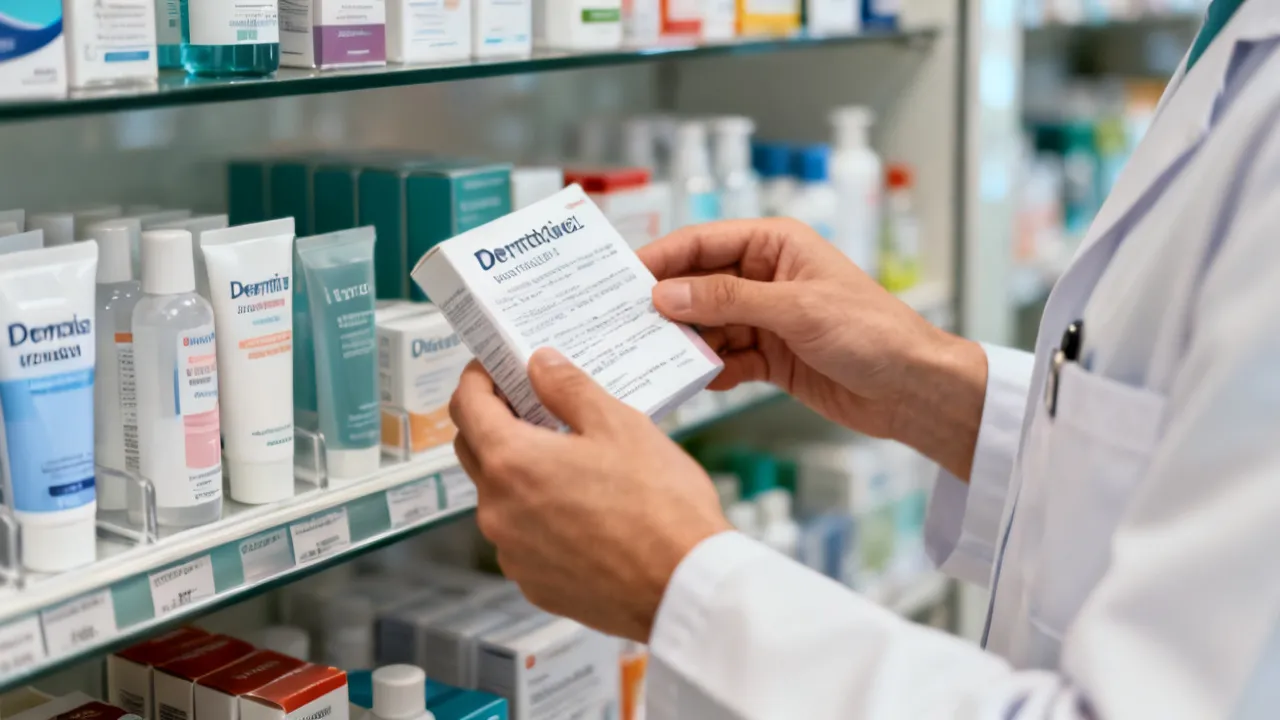
Ask questions that test whether the supplier understands the product. For example, if they claim the product is a dermatological item that must remain sealed, they should describe how it’s packaged and shipped. If the seller cannot answer basic handling questions, that suggests either low competence or unwillingness to be transparent.
3) Product documentation checks (the “what”)
Documentation is where informal sourcing channels either become verifiable or remain risky. You want evidence the product is identifiable, traceable, and consistent with labeling requirements.
- Batch/lot number and manufacturing details. A real batch/lot is not simply a random string; it should correspond to label information and allow traceability through legitimate channels.
- Label and insert information (instructions, warnings, and relevant regulatory markings). While the exact form depends on country, there should be coherent labeling.
- Regulatory authorization evidence where applicable. Depending on the product type and jurisdiction, there may be authorization references, marketing authorization numbers, or other regulator-linked markings.
- Independent verification: manufacturer or authorized distributor confirmation is often more reliable than third-party assurances. If you can contact the manufacturer and verify the batch is legitimate, that is a much stronger evidence pathway than “trust me” claims.
To the extent possible, avoid relying on marketing claims. Instead, focus on documentation and traceability. This aligns with broad counterfeit-prevention guidance used worldwide: provenance, documentation, and traceability are the central defenses against counterfeit or unlawfully distributed products.
Where “Linopimentel78” Fits: Interpreting Names and Handles in Sourcing Contexts
“Linopimentel78” appears to function as a handle rather than a verified business identity. Handles are common in messaging, social platforms, and informal selling communities. Objectively, handles do not indicate quality. They can represent:
- A reseller who sources from authorized distributors but uses email to coordinate sales
- A broker who consolidates orders and arranges fulfillment with third parties
- A legitimate contact associated with a specific product line
- An unreliable actor who avoids formal scrutiny or uses multiple identities to reduce accountability
Therefore, the correct expert stance is not to categorize the supplier based on the handle alone—but to insist on verification through documentation and traceability. Handles can help you locate the person behind the message, but they cannot substitute for compliance and provenance.
It can also be useful to look at how the seller uses the handle in practice. For example, does the handle appear on invoices or only in casual conversation? Does the seller provide consistent business details tied to the handle? Consistency over time can be a weak-to-moderate trust signal, but it still should not replace product documentation verification.
Compliance Perspective: Why Healthcare-Adjacent Products Need Extra Caution
Many topical dermatological products are relatively simple to use, but risks exist throughout the supply chain. Regulators and industry bodies repeatedly warn that unauthorized or counterfeit products may include incorrect ingredients, incorrect concentrations, expired stock, incomplete labeling, or contaminants. In some cases, packaging may be altered to disguise expiration or substitution.
From a compliance lens, this means:
- Purchasing from channels with unclear provenance increases risk. If you cannot trace the product to legitimate manufacturing and distribution, you cannot confirm its safety and label accuracy.
- Using products without confirming label accuracy can lead to ineffective treatment or adverse reactions. The difference between “similar” and “identical” formulations can matter significantly for skin outcomes and safety.
- Discarding packaging and batch details reduces your ability to respond if something goes wrong. If you later need to report an issue or request a correction, batch information can be critical.
Authoritative information should come from official consumer safety and medicines enforcement agencies. These bodies publish risk alerts and counterfeit detection guidance based on real cases. While the specifics differ by country, the underlying principle is consistent: verify identity, verify documentation, and confirm compliance before purchase.
Another compliance consideration: some products are regulated as medicines, while others may be classified as cosmetics or supplements. The regulatory classification affects required labeling, permitted marketing claims, distribution channels, and documentation. Email-based suppliers may not clearly communicate classification differences, which can cause consumers to unknowingly purchase products that are not authorized in their region.
Comparison Table: Verification Path vs. Source Type (No Links)
The following table compares common sourcing patterns. It is designed to help you decide what checks to prioritize when the initial keyword contact looks like Linopimentel78@gmielcom (email-based, identity not immediately verifiable).
| Source pattern | Typical trust signals | Key risks | What to verify first |
|---|---|---|---|
| Registered retailer with business profile | Clear legal entity, consistent customer service, standard returns | Lower, but not zero counterfeit risk | Regulatory status, batch/lot, return policy |
| Market reseller / broker | May provide invoices and lot numbers on request | Supply chain opacity; mix-ups across batches | Documentation + manufacturer trace confirmation |
| Email-based inquiry (keyword resembles an address) | Possible responsiveness and willingness to share details | Unclear legitimacy, no guaranteed regulatory oversight | Legal identity, batch proof, storage/shipping practices |
| Unverified social/forum selling | Sometimes includes photos, but not always documentation | High counterfeit and mismatch likelihood | Refuse to purchase without verifiable product documentation |
Step-by-Step Guide: How an Expert Would Vet a Seller Tied to the Keyword
This section provides a practical, sequential approach. Even when a supplier claims reliability, the goal is to verify objectively using evidence you can document and, where possible, cross-check through independent channels.
Think of this as building a chain of trust. If any link fails—identity, batch traceability, packaging integrity, or regulatory compliance—you either need stronger evidence or you should stop. With healthcare-adjacent items, “almost verified” is still not the same as “verifiably safe.”
Step 1: Clarify the exact product identity
Ask the supplier to state the exact product name, strength, formulation type, and intended use. Do not accept vague descriptions like “the same thing” or “original one.” Instead, request specific identity details that match official labeling.
Request a clear photo of the label showing batch/lot and expiry. Avoid cropped images that hide critical details such as manufacturing/expiry, regulatory markings, or the active ingredient concentration. If the seller refuses to provide readable batch/lot images, treat that as a major verification failure.
Additionally, ask for packaging photos that show the outer carton (if applicable), not just the individual tube or bottle. Outer packaging often contains regulatory markings and batch-related traceability information that may be essential for verification.
Step 2: Request traceability information
Confirm batch/lot number and manufacturing details. A safe industry practice is to ask whether the manufacturer can confirm that the batch was produced for legitimate distribution.
If the supplier has invoices, ask them to include batch/lot number on the invoice and keep it consistent with the product label photo. Inconsistent batch numbers across documents are a common fraud pattern because sellers may not have coherent inventory.
You can also ask how they obtained the stock (e.g., through authorized distribution, overstock clearance from a legitimate channel, or parallel distribution). Legitimate sellers can often describe general sourcing pathways without exposing sensitive business information.
Step 3: Validate regulatory authorization in your destination market
Without making assumptions, check whether the product is authorized by the relevant authority where you live. This step matters because authorization rules differ by country. A product marketed in one region may not be legally marketed in another.
If the supplier cannot explain authorization status, cannot describe labeling requirements, or provides contradictory statements across messages, treat it as a high-risk signal. Contradictions can appear accidentally, but frequently they indicate the supplier is improvising.
Also check whether the labeling language aligns with your region. If labeling is in an unexpected language or lacks required warnings (for example, missing ingredient lists or absent regulatory markings), then even if the product is authentic, it may be imported through questionable pathways.
Step 4: Evaluate packaging and tamper evidence
Ask how the product is sealed and protected during shipping. If the product has special packaging requirements, such as protection against light, moisture, or temperature extremes, request proof that these requirements are followed.
If the supplier ships in a way that risks damage—no protective wrapping, no sealed outer packaging, or lack of tamper-evident measures—then even authentic products may degrade or leak. Degradation can alter performance and potentially increase irritation risk for skin conditions.
Request details on how the seller addresses broken seals. Legitimate suppliers typically handle damaged packaging with replacement or refunds. Unverifiable sellers may ask you to accept the product “as is” or may refuse to help if the product arrives opened.
Step 5: Confirm pricing logic and documentation
If price is unusually low or inconsistent with common market pricing, request an itemized explanation and official invoice details. Low pricing alone is not proof of fraud, but it is a reason to increase scrutiny and verify more strongly.
Ask questions such as:
- Is the item new and within expiry?
- Is it a clearance/overstock item from authorized distribution?
- Are there any special restrictions or documentation limitations?
- Can they provide invoice details that include the product identity and batch/lot?
Experts typically recommend sequencing verification: do documentation checks before accepting price as a trust signal. That sequencing prevents the “pay quickly, verify later” trap where the buyer may be unable to recover funds or dispute the transaction after delivery.
Step 6: Use a payment method that offers dispute resolution
When dealing with email-based suppliers, choose payment channels that offer dispute handling. Avoid irreversible methods when possible. The purpose is not to assume fraud—it is to ensure you have a remedy if the product is not as advertised.
Ask yourself: If the seller disappears, can you still escalate the case? If the transaction is irreversible, you may lose both money and evidence.
If the seller insists on specific payment methods that remove dispute options, treat that as another red flag. Legitimate businesses generally cooperate with standard consumer-protection payment and invoicing practices.
Step 7: Keep records after delivery
Save photos of:
- The outer packaging (including shipping label if relevant)
- The product label showing batch/lot and expiry
- Any included documentation or inserts
- Seals and tamper-evident indicators
If any issue occurs—wrong product, damaged packaging, suspicious smell/appearance, missing batch details, or adverse reactions—these records support complaint handling and allow regulators or consumer protection pathways to investigate more effectively.
In some jurisdictions, reporting counterfeit products requires evidence. By keeping records from day one, you make it easier to identify whether the issue is isolated or part of a broader counterfeit supply pattern.
Conditions and Requirements (When to Proceed vs. Stop)
- Proceed only if you can confirm product identity, batch/lot traceability details, packaging integrity, and compliance status where applicable. In practice, this means you have consistent documentation and a plausible verification path.
- Do not proceed if the supplier refuses to share batch/lot information, cannot describe regulatory authorization, requests unusual payment practices, or provides inconsistent information across messages.
- Pause and consult a professional if the product is intended for treatment of a condition that requires clinical evaluation (for example, persistent dermatitis, signs of infection, rapidly worsening symptoms, or reactions). Verification of supply chain details does not replace clinical judgment.
It is also reasonable to pause if you feel pressured. High-pressure tactics are common in scams and in unauthorized sales. If the seller says “order now” or refuses to answer batch/documentation questions promptly, that is a behavioral red flag.
Industry Expert Insights: How Verification Reduces Risk in Informal Supply Chains
From an industry perspective, risk management in product distribution follows a consistent logic: the less transparent the supply chain, the more you rely on documentation and traceability. When a keyword points to an email contact like Linopimentel78@gmielcom, the “surface cues” (quick replies, friendly tone, occasional photos) should be treated as weak evidence.
Strong evidence includes manufacturer or authorized distributor trace confirmations, consistent label details, batch numbering that matches the documentation, and proof of authorization or compliance where applicable. In other words, verification is not a vibe check; it is a documentation check.
Another important industry insight is about buyer psychology. Many buyers focus on price rather than verification. Experts often recommend flipping the process: verify documentation first, evaluate price second. That sequencing reduces the classic scenario where someone pays quickly for an appealing number and only later discovers missing or incorrect batch/label details.
In informal supply channels, missing documentation is not always intentional, but it is still dangerous. Without it, you may not be able to determine whether the product is authentic, whether it is within expiry, whether it has been stored properly, or whether it meets labeling requirements. All of those questions matter for safety outcomes.
Finally, experts emphasize the difference between “authentic-looking” packaging and “traceably authentic” products. Scammers can copy labels and mimic standard layouts. What they cannot easily fake—at least not at scale—is a coherent chain of documentation that aligns manufacturer records, batch numbering, and regulator expectations.
Practical FAQs (Objective, Compliance-Oriented)
FAQ 1: What does “Linopimentel78@gmielcom” indicate?
It appears to be an email-based contact handle rather than a clearly identified corporate storefront. Email contact alone does not establish product authenticity. You should verify legal identity and product documentation before purchasing.
Additionally, minor spelling or domain variations (intentional or accidental) can be part of how informal sellers operate. Even if the address is real, that still doesn’t provide proof that the seller is authorized to distribute healthcare-related items in your region.
FAQ 2: Can price quotes from an email supplier be trusted?
Price quotes can be accurate, but they are not reliable proof of legitimacy. Verify product identity, batch/lot numbers, expiry dates, and—where applicable—regulatory authorization status.
If the seller refuses to provide itemized invoice details or insists you pay before any traceable information is shared, consider the quote untrusted until verified.
FAQ 3: What supplier details should I request first?
Start with the supplier’s legal business name (or equivalent accountability), physical address, and the exact product identity including batch/lot and expiry. Then request information about packaging and shipping handling conditions.
If they cannot provide at least basic accountability information, you are essentially buying from a non-transparent source—which is not what you want for healthcare-adjacent products.
FAQ 4: How can I reduce the chance of receiving counterfeit products?
Ask for traceable batch details and documentation that matches the label. Where feasible, contact the manufacturer or authorized distributor to verify whether the batch is legitimate for distribution. Keep delivery records to support disputes if needed.
Also, verify that the product packaging and labeling match what you would expect from legitimate manufacturing for your region. Differences can indicate substitution, repackaging, or unauthorized imports.
FAQ 5: What if the supplier refuses to share documentation?
Refusal is a major red flag. An evidence-based approach recommends not proceeding unless you can obtain verifiable information such as batch/lot and clear label documentation.
Some sellers cite privacy or inconvenience. But in healthcare-adjacent sourcing, traceability is not optional. Without it, you cannot responsibly evaluate risk or handle issues after delivery.
FAQ 6: Are there location-related considerations?
If you are dealing with delivery to a specific region, confirm the product’s authorization and labeling requirements for that destination. If your prompt includes location placeholders, the same principle applies—verify compliance “nearby” (i.e., in your relevant jurisdiction) rather than relying on claims that may not match local rules.
In practice, differences in languages, warning statements, ingredient disclosures, and authorization numbers can reveal whether a product is legally marketed for your country or region.
FAQ 7: What should I do if the product seems suspicious after arrival?
Stop using it if you suspect contamination or mismatch with the label. Preserve packaging and batch information, then contact the supplier promptly and follow local consumer-protection guidance. For healthcare-related products, consult a qualified professional if you experience adverse effects.
Try not to discard evidence quickly. Even if you feel embarrassed or disappointed, the documentation can protect you and help prevent others from being harmed.
FAQ 8: Do I need professional medical advice to evaluate a topical product?
Not always, but if the product is for a medical condition, if symptoms persist, or if there are signs of infection or adverse reactions, professional advice is appropriate. Verification of supply chain details does not replace clinical guidance.
Also consider that even authentic products can be inappropriate for certain skin conditions. Verification ensures you know what you’re receiving; clinical guidance helps ensure it’s appropriate for your specific situation.
FAQ 9: Why is batch/lot information so important?
Batch/lot details enable traceability. They help determine whether the product can be traced back to legitimate manufacturing and distribution, which is crucial for addressing quality concerns or safety issues.
Batch numbers also help identify recalls. If a batch is implicated in a safety notice, you can cross-check whether your product belongs to the affected lot. Without batch numbers, you lose that protective mechanism.
Additional Considerations: Recognizing “Email Storefront” Scams and Handling Realistic Uncertainty
Because your original prompt focuses on the keyword Linopimentel78@gmielcom, it is helpful to add practical context about how email-based storefront behavior often differs from legitimate retail. This is not to say that all email sellers are scammers; rather, it is to clarify what patterns tend to correlate with elevated risk.
Common scam or high-risk behaviors in email-based healthcare-related selling can include: inability to provide batch/lot details; asking buyers to pay through non-dispute methods; refusing to provide invoice documentation; changing the promised shipping timeframe frequently; offering “too good to be true” pricing without explainable provenance; or using language that shifts responsibility away from the seller (“you bought it, so no refunds”).
However, there are also legitimate reasons an email seller might delay documentation. For example, some sellers may be small businesses still setting up formal infrastructure. That’s why the best approach is evidence-based rather than fear-based. You should ask specific questions and set clear conditions. If they provide evidence, you can evaluate; if they avoid evidence, you should stop.
Uncertainty is normal during the vetting process. The objective is not to eliminate all uncertainty (which is impossible before delivery), but to reduce it to a manageable level by requiring proof of traceability and compliance. Think of it as minimizing “unknown unknowns.”
What “Proceed” Actually Means: A Clear Checklist Before You Buy
To make “proceed only if” operational, you can treat it like a pre-purchase checklist. You are not merely asking for reassurance; you are requesting enough evidence to responsibly evaluate risk.
Before buying from a seller connected to Linopimentel78@gmielcom, confirm the following minimum checklist:
- Identity alignment: the seller’s business name/address/invoice details match across messages.
- Product specificity: exact product name and concentration/strength are provided consistently.
- Traceability: batch/lot number and expiry are provided in readable form.
- Packaging integrity expectations: the seller describes sealing and protective shipping practices.
- Regulatory labeling relevance: labeling appears consistent with your destination market requirements.
- Remedy availability: the seller outlines a realistic refund/replacement path for wrong/damaged product.
- Dispute-capable payment: payment method allows dispute handling if needed.
If any checklist item fails—especially traceability and identity alignment—you should not purchase. In healthcare-adjacent contexts, failing even one item can mean that you cannot verify what you’re receiving.
Dealing With Pressure: Timers, Urgency, and “Last Chance” Tactics
Email storefronts sometimes rely on urgency language: “limited stock,” “pay now,” “discount ends today,” or “I need immediate confirmation.” While legitimate sellers can communicate urgency during promotions, urgency becomes suspicious when it interferes with documentation. If the seller refuses to provide batch/lot and label photos until after payment, then urgency is serving as a barrier to verification.
As a buyer, you can respond by stating your verification requirements. A safe stance is: you are willing to proceed only after receiving batch/lot and label documentation and after confirming compliance where applicable. If the seller accommodates this, it can be a positive trust signal. If they cannot or will not, treat it as a stop condition.
Another pressure pattern is “don’t worry, it’s fine.” Informal reassurance without evidence is not sufficient for healthcare-adjacent products. You may be well-intentioned and still receive a product that is not what you think it is.
Why Independent Verification Can Be the Decisive Step
In many cases, the most decisive verification is independent confirmation. If the product is manufactured by a known brand, you can often contact the manufacturer’s official support channel to ask whether a particular batch/lot is associated with legitimate distribution. While the ability to confirm varies by brand and by privacy policy, manufacturers generally understand the importance of traceability.
Independent verification turns your assessment from “seller claims” into “documented legitimacy.” If the manufacturer can corroborate, your risk decreases significantly. If they cannot confirm (or confirm the batch is not recognized), you have strong grounds to avoid the purchase and report suspicious activity if appropriate.
When independent verification is not possible, the next best option is to rely on coherent documentation: consistent labels, consistent batch numbers across photos and invoices, and credible descriptions of storage and shipping handling.
Record Keeping: Evidence That Protects You Later
One reason some buyers feel powerless after receiving a questionable product is that they discard evidence early. If you proceed with purchase after verifying traceability, you should still keep records after delivery.
Keep at least:
- Photos of the outer shipping package
- Photos of the product label and batch/lot and expiry
- Photos of seals/tamper indicators
- Any included insert documents
- Copies of emails and invoice details
If you experience an adverse reaction, you may need to consult a professional. Having batch information can help the professional and, if necessary, help authorities evaluate whether a batch is implicated in safety issues.
Even if the product seems fine, record keeping supports accountability. It makes it easier to handle returns or disputes and discourages “we didn’t promise that” behavior.
Handling Adverse Effects or Suspected Mismatch: A Responsible Response
If you suspect the product is wrong, counterfeit, contaminated, or inconsistent with the labeling, you should stop using it. Seek medical advice if you experience symptoms beyond mild irritation, especially if you see signs of infection, worsening inflammation, blistering, or systemic symptoms.
Then preserve evidence: do not remove seals or discard packaging. Contact the supplier promptly and request resolution. Additionally, consider reporting to the relevant consumer-protection authority in your jurisdiction, especially if you believe it is a counterfeit distribution channel.
Responsible response protects you and can reduce harm to other buyers. Even if you cannot fully resolve the issue with the supplier, authorities can use reported information to identify patterns of unlawful distribution.
Conclusion: A Responsible Path Grounded in Verification
Using Linopimentel78@gmielcom as a starting keyword is workable only as a prompt to ask better questions—not as proof of authenticity. A responsible, expert approach prioritizes traceability, regulatory compliance, and documentation before purchase and before use.
If you follow the step-by-step vetting process—clarifying exact product identity, requesting batch/lot and expiry, verifying packaging integrity, confirming regulatory authorization where applicable, and using dispute-capable payment—you convert uncertainty into actionable verification. That reduces risk and supports safer consumer decisions for healthcare-adjacent products.
Ultimately, verification protects both your health and your finances. It is the simplest and most effective way to prevent avoidable harm when an email-based contact is involved.
-
1

A Guide to Cost-Efficient Small Electric Cars for Seniors
-
2
Mastering Debt Consolidation: Boost Your Credit Score and Manage Interest Rates
-
3
Your Guide to Loans, Credit Checks, and Interest Rates
-
4
Affordable Independent Living: Finding the Right Senior Housing
-
5
Guide to Senior Living Apartments: Affordable and Comfortable Environments