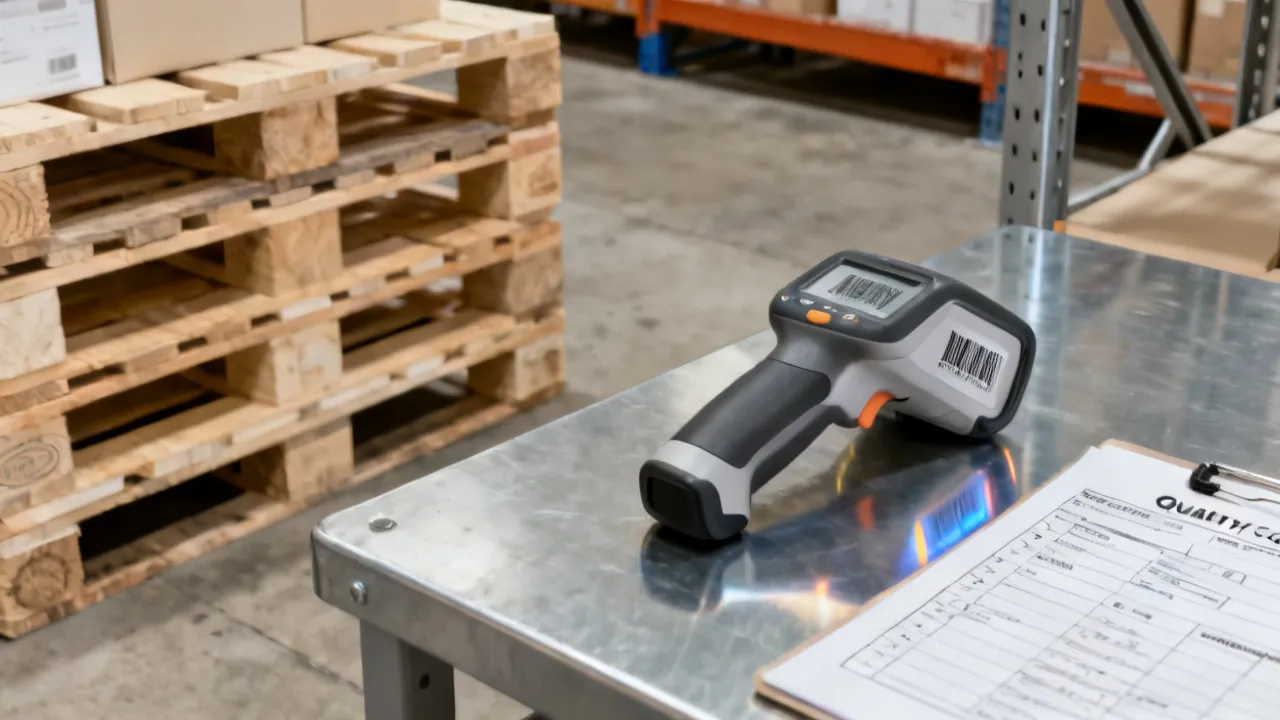
Procurement Insights for Supplier Quotes and Reference Numbers
This guide explains how to interpret supplier quotes and reconcile reference numbers like “39196734841” to reduce ordering errors. Objectively, these keywords relate to procurement workflows, quote verification, and identity checks across purchasing systems, documents, and communications. You’ll learn practical validation steps, quality expectations, and decision conditions used by procurement teams.

Key takeaway: verify reference numbers and supplier terms early to prevent costly misorders
When procurement teams work with supplier quotes and reference identifiers such as 39196734841, the highest-impact action is to confirm that the quote is tied to the correct item scope, pricing conditions, delivery expectations, and document version before any purchase commitment. In professional purchasing operations, small mismatches—like a quote drafted for one SKU set or an attachment updated in a later revision—can ripple into backorders, disputes, and delays. This guide frames top-practice handling of those procurement inputs using an objective, industry-style workflow.
Because procurement touches many downstream systems—requisitioning, sourcing, purchasing, receiving, accounts payable, and sometimes quality assurance—it is helpful to treat a quote not simply as “a price,” but as a controlled, auditable artifact. Reference numbers and supplier terms are the connective tissue that allow different teams (and different systems) to understand the same deal. When that connective tissue is wrong, even a technically correct product can create administrative failure, such as invoices that cannot be matched to a purchase order, shipments that cannot be accepted without exceptions, and warranty claims that cannot be processed due to incomplete paperwork.
In this sense, verifying a reference number like 39196734841 is less about paranoia and more about operational reliability. The goal is to ensure that when you later need to answer questions—“What exactly did we approve?” “Which version of the quote governed the PO?” “What lead time did the supplier commit to under those terms?”—the evidence is already aligned and easy to retrieve. This is what audit readiness looks like in procurement: consistent, traceable inputs that reduce human dependency and reduce the chance of expensive rework.
Why these procurement elements matter in real purchasing systems
Procurement is not only about selecting vendors; it is about aligning commercial terms, technical scope, and traceable identifiers across internal approvals and supplier documentation. Keywords such as supplier details, price information, and reference numbers typically appear together because they form the minimum set of evidence required to (1) approve spending, (2) validate what was quoted, and (3) ensure the invoice can be matched to the purchase order and receipt.
In many organizations, the reference number—here represented by 39196734841—functions as a cross-document key. It may be used in emails, quotation PDFs, system line-item notes, internal tracking sheets, ERP fields, procurement portals, or even supplier portals. Regardless of the exact format, the business intent remains consistent: allow purchasing, receiving, finance, and quality assurance to converge on the same “version of truth.”
To understand why that convergence matters, consider what happens in a typical purchase-to-pay cycle. A requestor submits a requisition based on an internal specification. Procurement seeks supplier quotes and selects one based on cost, lead time, compliance, and availability. Purchasing issues a purchase order referencing the agreed price and terms. Receiving confirms that the delivered items match what the PO called for. Accounts payable then attempts to match the supplier invoice to the PO and receiving record, often with automated or semi-automated workflows. Quality and compliance teams may also review certificates, test reports, and documentation packages tied to the quoted scope.
If the quote version referenced by 39196734841 differs from the one used to create the PO, or if the quote was prepared for different scope terms (for example, excluding documentation or including different packaging), the downstream systems may fail to reconcile. Finance might treat the invoice as an exception. Receiving might reject the delivery due to missing documentation. Project teams may experience schedule slippage if lead time is longer than expected. Even worse, you may face disputes where both sides believe they are acting according to a “correct” document version.
This is why these procurement elements are often discussed together. They represent a structured set of facts that must remain coherent across time and across departments. Reference numbers help preserve that coherence; supplier terms and price information make the commercial meaning unambiguous; and scope alignment ensures that the item being bought is the item being delivered.
Industry perspective: what experts look for when reconciling quotes and pricing
An experienced procurement lead typically evaluates three layers in parallel:
- Commercial layer: the quoted unit price, total price basis (including packaging, taxes if applicable, and payment terms), and any commercial conditions (warranty, returns, lead-time assumptions, or incoterms).
- Operational layer: lead time, delivery method, packaging requirements, and whether the quote references stock availability versus manufacturing/fulfillment timelines.
- Traceability layer: the supplier’s quote identifiers, your internal requisition or purchase reference, revision numbers, and—commonly—the reference number that appears on documents and messages (e.g., 39196734841).
If any one of these layers is inconsistent—such as the pricing being for a different quantity break, or the referenced parts list differing by a single line—then downstream processes (AP matching, receiving acceptance, and warranty administration) become friction-heavy. That is why quote verification is often treated as a risk-control activity rather than a clerical step.
Experts also pay attention to how procurement “evidence” is captured. In some organizations, the quote PDF is stored in a document management system. In others, the email thread is considered proof. In others still, a portal stores the formal quote, including the reference number and revision metadata. Regardless of where evidence lives, experts ensure that the PO and invoice fields map back to the same quote reference, which typically includes both the quote number and the revision indicator.
For example, suppose a supplier sends a quote and includes the identifier 39196734841 in the subject line and on the cover page. Later, the supplier updates a section for packaging instructions but keeps the same document title. If the updated version is not clearly labeled as a revision, a procurement team may unknowingly approve the earlier revision. This can lead to a mismatch where the PO expects one packaging format while the delivered goods follow the updated guidance. The issue might not surface until receiving inspection, but by then the cost of correction has increased.
In mature procurement organizations, these issues are reduced by training, checklists, and controlled approvals. The goal is to make “right first time” the default, not a lucky outcome.
From keywords to practice: interpreting “supplier quotes” and “price information”
In practical terms, “supplier quotes” and “price information” mean more than a number on a PDF. Industry teams treat quote data as a structured set of assertions:
- Price basis: per unit or per lot; includes or excludes freight; tax treatment consistent with local policy; and currency clarity.
- Quantity assumptions: minimum order quantities, quantity breaks, and whether the price is contingent on a specific pack configuration.
- Validity window: the period during which the quote remains honored—often tied to commodity changes or supplier capacity.
- Change control: what happens if the supplier updates the quote—whether the old version remains valid or must be replaced.
When these assertions are traceable to the same reference identifier (like 39196734841), approvals become faster because stakeholders can verify the same artifacts consistently. When they are not, teams spend time hunting for “what exactly was quoted” and “which revision was used.” That hunting is not cost-neutral; it consumes hours across procurement analysts, contract managers, and sometimes legal teams.
Also, quote interpretation must reflect the type of purchase. In indirect materials procurement, unit prices may be straightforward but delivery dates might vary. In direct procurement for manufacturing, a quote might include lead time commitments that assume particular raw material availability. In construction and engineering contexts, quote scope can include installation support, technical drawings, commissioning, or compliance documentation. In services procurement, price may include labor categories, travel, overtime rules, or assumptions about the number of on-site visits.
In each scenario, “price information” should be interpreted relative to scope and assumptions. A cheap price that rests on unrealistic lead time or incomplete deliverables is often not truly cheaper once you include the costs of delays, rework, and administrative exceptions.
Common failure points and how to reduce them
Procurement issues are frequently predictable. Below are common failure points linked to supplier quote handling and reference identifiers:
- Version mismatch: the email thread uses one attachment, while the final quote used for approval is a newer revision.
- Scope ambiguity: “price for the product” is unclear—e.g., does it include installation, testing, documentation, or handling?
- Identifier drift: reference numbers (including 39196734841) are copied incorrectly into internal systems, causing invoice-matching failures later.
- Conditional pricing: the quote price is contingent on lead time or order timing, but the condition is overlooked.
- Supplier-side changes: substitutions or alternates are offered informally and later treated as binding, even when not accepted via a formal change order.
Other common issues that often appear in real-world workflows include:
- Currency and tax confusion: a quote might be denominated in a foreign currency but you budgeted in local currency. Or the quote might quote “excluding VAT” while your PO expects “including VAT.”
- Inconsistent packing assumptions: the quote could specify net weight, packaging type, or palletization. If receiving expects different packaging due to PO notes, it may reject or delay acceptance.
- Missing documentation deliverables: certificates of conformity, test reports, safety data sheets, calibration certificates, or inspection reports may be referenced in a footnote but not turned into explicit PO requirements.
- Unclear acceptance criteria: a quote might say “subject to inspection” without specifying what constitutes acceptance, creating disputes later if the delivered goods are slightly outside internal tolerances.
- Lead time tied to milestones: a quote might say delivery depends on an engineering approval milestone. If procurement issues the PO without ensuring the milestone timeline is clear, the supplier’s “lead time” becomes conditional.
Experts reduce these risks by enforcing a repeatable validation routine and documenting decisions. This does not require complex tools; it requires discipline. The simplest way to build discipline is to standardize the questions procurement asks every time it handles a quote—especially when a reference number like 39196734841 is used.
Additionally, experts aim to reduce “silent drift.” Silent drift occurs when teams assume that the quote and PO terms are identical but do not explicitly verify them. For example, the supplier might have included a warranty clause in the quote PDF, but the PO template might use a different warranty framework. If your procurement team does not reconcile those differences, the contract basis becomes ambiguous.
Step-by-step guide: validating a supplier quote tied to 39196734841
The following is a practical, step-by-step workflow procurement professionals commonly follow to ensure that supplier quotes and reference numbers can be audited and trusted. It is intentionally written to be implementable regardless of industry segment.
- Identify the quote artifact clearly: confirm the quote document name, revision indicator, and the quote issue date. Make sure the quote is the one that includes 39196734841 (or references that number in a coherent location such as the cover page, subject line, or document footer). If multiple PDFs exist, ensure you are opening the one that corresponds to the referenced number.
- Confirm scope alignment: verify that the quoted items exactly match your requisition lines or specifications. If your internal requisition includes technical specs (dimensions, material grade, compliance requirements), ensure the quote mirrors them. Pay attention to subtle differences such as “equivalent,” “alternate,” or “compatible” wording, because those terms can imply scope changes even when item names look similar.
- Reconcile price information fields: capture unit price, total price, quantity basis, currency, and whether freight/taxes are included. Check for special terms such as payment discounts, surcharges, or warranty inclusions. Ensure that quantity breaks are consistent with the quantities you plan to order. If the quote price depends on a minimum quantity, confirm you meet that minimum.
- Validate lead-time assumptions: ensure that the quote’s lead time is aligned with your required delivery date. If the supplier indicates “estimated” timelines, document that uncertainty and decide whether it is acceptable for your project schedule. If the quote conditions lead time on receiving engineering approvals, confirm the internal approval timeline is feasible.
- Check supplier details thoroughly: confirm the legal name, billing address, shipping location, and any requested banking or invoicing references. Mismatched supplier records often create invoice processing delays. Also verify that the supplier’s contact points for order confirmations and delivery notices match your operational workflow.
- Confirm traceability: ensure the reference number (e.g., 39196734841) is consistently used in the purchase order, receiving record notes, and invoice instructions. Consistency is the difference between smooth AP matching and repeated exception handling. If your ERP has a field for “Supplier Quote Reference,” populate it with the exact value as shown on the quote.
- Document acceptance criteria: record what “approved” means—e.g., acceptable alternates, packaging expectations, documentation deliverables (certificates, manuals, test reports), and acceptance testing method. If the quote includes inspection terms, ensure those terms are visible to receiving and quality teams and are not only buried in contract language.
- Perform final approval with controlled versioning: once approved, “lock” the quote version in your documentation process and prohibit “silent” edits. If updates occur, require a formal re-approval step. If you work with an internal approval tool, attach the exact quote revision used and include the reference number in the approval record so that auditors can replicate your decision trail.
- Prepare for receipt and matching: communicate to receiving what documents will accompany the shipment, and ensure the PO line details are complete enough for goods receipt and invoice matching. Also confirm whether partial shipments are allowed and how they should be staged in the ERP to prevent invoice line mismatches.
While the nine steps above are broadly applicable, the real differentiator between organizations is how they handle exceptions. A disciplined procurement team not only validates “happy path” scenarios but also defines what to do when a field is uncertain—such as freight inclusion, estimated lead time, or a proposed alternate part.
For example, if the supplier indicates lead time is “approximately X weeks” but does not confirm the exact date, a procurement team should either (1) obtain a more precise commitment, (2) add a conditional risk statement and adjust project scheduling assumptions, or (3) request order-by milestone terms that clarify delivery obligations. The decision should be recorded and tied to the same reference number 39196734841 so that it can be reviewed later.
Conditions and requirements: when a quote is considered approvable
Below is a supplement to the steps above. It lists common decision conditions procurement teams apply. Use it as a checklist to determine whether the quote tied to 39196734841 is suitable for approval.
| Requirement / Condition | What “meets the requirement” looks like | Typical procurement action if not met |
|---|---|---|
| Reference consistency | The quote document and internal records reference 39196734841 in a consistent and unambiguous way | Request supplier confirmation or correct internal entry before PO issuance |
| Price information clarity | Unit price, totals, currency, and inclusion/exclusion of freight/tax are explicitly stated | Clarify with supplier and update the approval package |
| Scope match | Quoted item list matches the requisition/specification set (no undocumented alternates) | Reject or request a revised quote and document agreed substitutions formally |
| Supplier details accuracy | Supplier legal entity and invoicing/shipping information align with master data | Update supplier records or request correct invoicing details |
| Lead-time realism | Delivery commitments are consistent with your requirement date or clearly flagged as estimated | Adjust schedule risk assessment or renegotiate lead time |
| Validity window | Quote validity covers the approval-to-PO timeframe | Reconfirm pricing if the validity window is about to expire |
| Documented change handling | There is a clear statement of what revision governs if the supplier updates the quote | Request supplier to state revision governance; record change control in procurement system |
| Alignment with PO template terms | Commercial terms in the quote do not contradict the PO template assumptions (warranty, incoterms, returns) | Escalate to contract/procurement legal for reconciliation and PO term updates |
In many organizations, the table above becomes a standard “pre-PO gate.” Procurement teams might also incorporate it into internal procurement workflows—such as a checklist that must be completed before the PO can be issued. This reduces variance between individuals and creates consistent audit trails.
Important: even if the quote appears “obviously correct,” approvability conditions should still be verified. Automation can help, but automation usually requires that data fields be entered correctly (including reference numbers like 39196734841) and that the quote’s scope and terms are interpreted consistently.
Localized considerations: “nearby” context and procurement expectations
Procurement behaviors can vary by region due to logistics practices, delivery norms, and local business etiquette. Where location-specific placeholders would normally be used, this guide treats the planning context as “nearby” in order to avoid implying a specific city or country. In practical terms, “nearby” procurement often emphasizes predictable transport lead time, clearer delivery appointment expectations, and closer coordination between shipping/receiving teams.
That said, the core verification principles—reference consistency, price clarity, and scope alignment—remain stable across jurisdictions. Even when delivery distances are shorter, invoice matching still depends on consistent identifiers and clearly documented conditions. For example, a shorter delivery route might reduce lead time variance, but it does not eliminate the risk that the supplier invoice references a different quote version or that VAT/tax handling differs from your expectation.
Nearness can also influence how people communicate. Informal procurement conversations may lead to “fast approvals” where the supplier updates the quote informally by email. In nearby procurement scenarios, this might happen more often because the relationship is closer. The risk remains the same: informal updates can cause mismatch if they are not incorporated into a controlled approval version with the correct 39196734841 reference.
For teams operating in multiple regions, a practical approach is to establish a universal validation routine (like the steps in this guide) while allowing only delivery coordination tasks to vary by local practice. That way, you protect the parts of procurement that are most sensitive to audit and mismatch risk.
Practical techniques for making verification easy, not burdensome
Verification can feel time-consuming if it is done ad hoc. Procurement teams often improve cycle time by standardizing how they verify, not by skipping verification. Below are practical techniques that many teams adopt to make quote verification smoother.
1) Use a “quote evidence pack” per reference number
Create a standard folder or record containing (a) the supplier quote PDF that includes 39196734841, (b) the quote revision metadata, (c) any email confirmation from the supplier, (d) your internal approval checklist, and (e) any scope clarifications. When disputes arise, the evidence pack makes it possible to respond quickly.
2) Map quote fields to PO template fields
If your PO template has dedicated fields for unit price, currency, freight terms, incoterms, warranty duration, and invoice reference, verify that those fields are populated directly from the quote. This reduces the risk of transcription errors—one of the most common sources of mismatch. The reference number 39196734841 should be mapped consistently to a dedicated PO note or ERP field where possible.
3) Require a “revision statement” when updates occur
When a supplier sends an updated quote after initial approval, request a short statement that identifies what changed and which revision is now binding. For example: “Revision 3 replaces Revision 2 for quote reference 39196734841; all pricing remains unchanged except packaging delivery terms.” A statement like this makes it easier to determine whether re-approval is required.
4) Train receiving and AP with the same reference
Some teams only brief procurement decision-makers. But receiving and AP teams benefit from knowing the reference number that underpins the PO. If receiving sees the reference number in PO notes, they can confirm that delivery paperwork matches it. Likewise AP can more easily resolve invoice exceptions when it understands which quote reference to check.
5) Use controlled language for acceptance criteria
Instead of “as per quote,” define acceptance criteria clearly. For instance, specify documentation deliverables (certificates, manuals, inspection reports) and define inspection methodology at a high level. This prevents the situation where a supplier considers deliverables satisfied because they exist in their quote, while receiving considers deliverables incomplete because the PO did not explicitly require them in a way that receiving can verify.
How reference numbers like 39196734841 support audit readiness
In audit contexts, organizations must demonstrate that purchasing decisions were based on authorized, documented inputs. Reference numbers like 39196734841 help create an audit trail that links internal approvals to supplier documentation.
For audit readiness, the reference number should support the following logic chain:
- The requisition requested a defined scope and quantity.
- The supplier quote referencing 39196734841 proposed a defined price, delivery expectation, and commercial terms.
- The internal approval recorded that the procurement decision used the quote version containing 39196734841.
- The PO issued to the supplier included the agreed price and terms and referenced 39196734841 (directly or through structured PO fields).
- The supplier invoice referenced the PO and did not contradict the quote basis, and any differences could be explained as permitted change events.
If this chain breaks at any point—for example, if the PO references the wrong quote revision or if the supplier invoice references a different quotation reference—auditors will not necessarily assume wrongdoing, but they will likely require explanations, evidence, and sometimes process remediation. Good procurement controls reduce this burden.
Moreover, audit readiness is not only about external compliance. Internally, it helps teams improve. If you can trace costs, delays, and invoice issues back to the reference number and quote revision, you can measure root causes and update your procurement process.
Detailed examples of mismatches and what they look like
To make these concepts concrete, here are realistic mismatch scenarios and how verifying 39196734841 and supplier terms early can prevent them.
Example A: Wrong quantity break
A supplier quote includes tiered pricing. At quantity 1–99 units, the unit price is higher; at quantity 100+ units, the unit price decreases. The quote version tied to 39196734841 might show the lower break for 100 units. However, an internal buyer creates a PO for 99 units while copying the lower unit price. Receiving then delivers 99 units, and the supplier invoice includes pricing for the correct break (higher price). Finance flags the invoice as an exception because invoice totals do not match PO totals. If verification was done earlier, procurement would have confirmed the correct quantity break for the intended PO quantity.
Example B: Packaging included vs excluded
A supplier quote contains a line: “Pricing excludes special packaging; standard packaging included.” Meanwhile, receiving requires special packaging for shipping insurance or compliance. If procurement approves the quote without confirming scope and acceptance criteria, the PO might not include packaging requirements. The supplier delivers in standard packaging; receiving rejects delivery or delays acceptance pending repackaging. If the reference number 39196734841 is verified along with the quote’s packaging terms, procurement can adjust the scope or request a revised quote before issuing the PO.
Example C: Lead time depends on a milestone
A quote indicates delivery lead time is “X weeks from engineering sign-off.” Procurement schedules the PO assuming lead time begins immediately after PO issuance. But engineering sign-off happens later, pushing delivery. If procurement verifies lead-time assumptions and records them as part of the approval evidence tied to 39196734841, the project team can schedule engineering sign-off earlier or negotiate a revised lead time with the supplier.
Example D: Supplier name mismatch and invoice rejection
The quote is issued by “Supplier A Ltd.” but your ERP has vendor “Supplier A LLC” or a different legal entity. The reference number 39196734841 may still be correct, but supplier details are mismatched. The supplier invoice arrives and cannot be processed because the vendor identity doesn’t map to the ERP master data. Verification should include supplier details accuracy. If it is done early, procurement can update master data or request an invoice issued under the correct entity.
What to do when something doesn’t match
Verification is only useful if teams know how to respond when mismatches are found. The most common response is not to “fix it later,” but to pause PO issuance or re-approval until the mismatch is resolved and evidence is captured.
Here is a practical decision approach:
- Determine whether the mismatch is contractual, operational, or administrative.
A contractual mismatch might involve warranty terms, incoterms, or return policies. An operational mismatch might involve lead time, delivery method, or packaging deliverables. An administrative mismatch might involve reference number formatting, supplier legal entity, or invoice instructions. - Assess whether the mismatch changes the total cost or risk.
If it does, require a supplier correction or revised quote tied to 39196734841. If it does not, you may be able to adjust internal PO fields without supplier action—provided the quote terms remain valid. - Require written confirmation for changes.
Avoid relying on informal phone or chat commitments unless they are documented and reflected in the approved quote revision or a formal supplier change notice. - Update the approval record to reflect the resolved version.
If the supplier issues a corrected quote, re-approve the updated version and keep evidence that shows the final binding state for 39196734841.
In many disputes, the root cause is not the presence of a mismatch, but the absence of a clear decision record. Teams may decide informally that “the quote is fine” but later cannot prove what “fine” meant. A structured mismatch handling process prevents that.
Integrating quote verification into procurement governance
Successful organizations integrate quote verification into their procurement governance model. This can include approvals, policy gates, system validations, and periodic training.
Approval gates
A quote might require different approval levels depending on value, risk category, or strategic importance. The verification routine should be required for each approval gate but may be scaled in depth based on risk.
System validations
If your procurement system supports it, validations can reduce identifier drift. For example, if a PO must reference a supplier quote number or reference code, the system can enforce that field is not blank and matches expected patterns. Reference numbers like 39196734841 should be validated for format and completeness, especially if users are manually copying them from emails.
Policy gates for documentation deliverables
Quotes often include deliverable lists (certificates, manuals, compliance documentation). Some organizations require that those deliverables appear explicitly in PO terms or receiving instructions. This prevents the “we assumed the supplier would include it because it was mentioned in the quote” failure mode.
Training and role clarity
Procurement is a team sport. Receiving, AP, and quality need to understand what they should verify and where to look for reference proof. Training should emphasize that reference numbers like 39196734841 are not random—they are the key that ties documents together.
Source-backed standards: what objective guidance says about procurement control
To keep this article objective, the procurement controls described above align with widely adopted governance concepts in enterprise procurement. For foundational perspectives, professional practice commonly draws on:
- ISO 9001 (quality management principles): emphasizes documented processes, consistent requirements, and controlled changes—useful when managing quote revisions and scope acceptance.
- ISO 19650 (information management for assets): supports the idea of consistent information and controlled versions; relevant to quote/document control.
- AP/ERP matching concepts in finance operations: the “three-way match” approach (purchase order, receipt, invoice) is a standard risk control described across many finance governance frameworks.
For further reading, readers may consult official standard bodies such as ISO and general finance governance documentation from established professional organizations. (No single statistic is asserted here because procurement quote accuracy varies by sector and system maturity.)
While procurement practices vary by industry, the underlying principle is consistent: controls exist to ensure that what is approved is what is executed. Version control and traceability are a central part of that alignment. Reference numbers like 39196734841 are an everyday mechanism to implement those principles.
Market realities: how suppliers structure quotes and why it affects buyers
Supplier quoting practices vary by industry. Some suppliers quote with extensive detail (itemized costs, packaging, test certificates), while others provide compact summaries with terms referenced in footnotes or separate attachments. Regardless of length, buyers should treat quote content as a contractual precondition to the purchase order.
From a buyer perspective, suppliers’ quote structures influence how verification should be performed. If a supplier places critical terms in footnotes, your procurement team must check those footnotes and confirm they are reflected in the PO. If a supplier provides a separate “terms and conditions” attachment, you should verify version alignment across that document set. If multiple documents are combined under a single quote reference, your evidence pack should preserve them together under the same 39196734841 key.
In many procurement environments, buyers also face pressure to reduce cycle time. However, shortening the quote validation phase without strengthening controls often shifts effort downstream. That trade-off is exactly why reference identifiers like 39196734841 matter: they enable rapid confirmation that “the quote we approved” is “the quote the supplier intended.”
Cycle time pressure can lead to shortcuts such as copying numbers from a previous PO or using cached vendor pricing. Those practices create hidden risk because they bypass the evidence chain. A disciplined approach uses reference numbers and verification steps to make quick decisions safely.
FAQs
FAQ 1: What does a reference number like 39196734841 typically represent?
Reference numbers commonly identify a quotation, an order draft, or a cross-document tracking key used by suppliers and buyers. The very important point is not the number itself, but whether it is referenced consistently across the quote, purchase order, receiving records, and invoice instructions.
FAQ 2: If the supplier quote looks correct, should I still verify pricing details?
Yes. Even when the quote appears correct, experts verify the price information fields because errors often hide in quantity breaks, freight inclusion, currency, tax handling, or payment-condition language. These issues usually surface later during AP matching or during receipt acceptance disputes.
FAQ 3: What should I do if the supplier sends an updated quote after approval?
Require a controlled change process: document the differences, confirm whether scope or commercial terms changed, and re-approve the updated quote if it affects the purchase order terms. Avoid informal acceptance via email that bypasses formal approval.
FAQ 4: How can I prevent invoice-matching exceptions related to supplier quote data?
Ensure that supplier details match master data, that the reference identifier (e.g., 39196734841) is used consistently, and that purchase order lines include enough detail to map to receiving confirmations. Also confirm invoice formatting instructions (part numbers, PO reference placement, and line item numbering).
FAQ 5: Does “nearby” procurement change quote verification steps?
It may affect lead-time assumptions and delivery coordination, but it does not replace verification. You should still reconcile price information, confirm scope alignment, and keep reference identifiers consistent for auditability.
FAQ 6: Are there industry benchmarks for how accurate supplier quotes should be?
Accuracy expectations vary by sector, supplier maturity, and system controls. Instead of relying on a single benchmark number, procurement teams typically use internal KPIs such as exception rates, mismatch causes, and the proportion of quotes requiring rework after approval.
Conclusion: treat supplier quotes and reference numbers as controlled, auditable procurement artifacts
In well-run procurement operations, supplier quotes and reference identifiers like 39196734841 are not passive documents—they are active inputs that determine whether the organization can buy, receive, and pay with minimal friction. By validating scope, reconciling price information, confirming supplier details, and maintaining traceable document versioning, procurement teams reduce errors while keeping cycle time efficient. Use the step-by-step guide and conditions table above as a repeatable routine whenever quotes are reviewed for approval.
-
1

A Guide to Cost-Efficient Small Electric Cars for Seniors
-
2
Mastering Debt Consolidation: Boost Your Credit Score and Manage Interest Rates
-
3
Your Guide to Loans, Credit Checks, and Interest Rates
-
4
Affordable Independent Living: Finding the Right Senior Housing
-
5
Guide to Senior Living Apartments: Affordable and Comfortable Environments