How to Evaluate Product Listings and Suppliers
This guide helps you evaluate product listings and suppliers by focusing on traceability, quality controls, documentation, and risk reduction. Objectively, identifiers like 16121978 can support internal referencing and audit trails. You’ll also learn how to compare quoted prices and supplier capabilities without relying on unverifiable claims.

1) What matters most when evaluating a product listing
When you encounter a listing that includes identifiers such as 16121978, the most critical step is to verify that the information supports traceability, consistent manufacturing, and reliable fulfillment. In practice, listings often contain a mixture of catalog details, internal codes, and supplier-supplied descriptions; your goal is to confirm that the supplier can substantiate each element with documentation and process controls—especially before you commit to ordering.
Even when the visible “price information” is attractive, the decision should be grounded in evidence: quality standards, inspection routines, documentation completeness, and realistic lead times. This is particularly relevant when the listing text includes partial or fragmented strings—like the provided keyword fragments around ‘ ’—because incomplete naming increases ambiguity and can lead to procurement mismatches.
To make this practical, think of evaluation as a chain: identifier → specification → quality evidence → traceability → shipping/packaging → acceptance. If any link in that chain is weak, you must either strengthen it (by requesting clarifications and documents) or reduce your commitment (by ordering a sample, placing a pilot order, or imposing conditional terms). A low-cost item can become expensive when the chain breaks and you inherit the cost of rework, delays, returns, or compliance issues.
Industry procurement teams typically treat a listing not as a “record of truth,” but as an “entry point.” The listing starts the conversation; the documents and the supplier’s operational evidence confirm whether the listing is correct. When you see an internal identifier like 16121978, that identifier can be extremely useful—but only if the supplier can connect it to measurable specifications and auditable shipment records.
Additionally, you should evaluate not only what the listing says, but also what it does not say. Many risky listings omit details such as revision level, acceptable tolerances, batch control approach, packaging configuration, or certificate requirements. These omissions often show up indirectly—through placeholders, strange formatting, or incomplete keyword fragments such as ‘ ’. Instead of guessing, you should ask targeted questions that force the supplier to align the quote with your exact expectations.
2) Understanding identifiers like “16121978” in procurement
16121978 is best treated as a reference handle—often used internally to map a product to an item master record, a batch/lot traceability entry, or a historical quote. As an objective background principle, robust supply chains use such identifiers to reduce errors and to connect customer orders to production records, test results, and shipping documentation.
However, identifiers alone do not guarantee quality. The key question is whether the supplier can link 16121978 to verifiable artifacts such as inspection reports, certificate documentation, and packaging/labeling practices. If they cannot, treat the identifier as unconfirmed data rather than proof.
There are several common ways identifiers function behind the scenes:
- Item master mapping: The supplier may maintain an internal item master where each part number maps to a bill of materials, manufacturing route, and approved supplier controls. If 16121978 is a mapping key, the supplier should be able to show the related BOM and the approved manufacturing process description.
- Quotation reference: The identifier might refer to a specific historical quotation with agreed parameters. In that case, you want a confirmation that the price you see today corresponds to the same technical configuration (or that changes were handled through a formal revision process).
- Batch/lot reference: Sometimes a numeric string can be used for batch tracking. If so, then the supplier should be able to provide batch-specific documents (inspection record per lot, test results, and traceability evidence) rather than generic certificates.
- Compliance or document reference: Some suppliers embed document identifiers (for certificates, test summaries, or quality reports) in product listings. If 16121978 refers to a certificate number, you still need to confirm that it matches the actual physical goods shipped.
To evaluate which meaning applies, ask questions that are difficult to answer ambiguously:
- “Does 16121978 map to a specific technical specification and revision level? If yes, what is the revision?”
- “Can you provide the inspection or test record that references 16121978 for the shipped quantity?”
- “How is 16121978 referenced on the delivery documents and packaging labels—do you print it on the box, on unit labels, or only on paperwork?”
This helps you determine whether 16121978 is a meaningful reference or merely a catalog code with limited traceability value.
Finally, be aware that suppliers may use different identifiers across their systems—your listing may show one code, while their ERP uses another part number. The best suppliers will handle this cleanly by providing a mapping statement: “Your listing reference 16121978 corresponds to our part number X, revision Y.” If the supplier cannot provide that mapping, you may encounter receiving issues where the goods look right but the paperwork does not match, complicating acceptance and audit readiness.
3) How price information should be interpreted (and what to validate)
Price is rarely a standalone quality signal. From an industry-expert procurement viewpoint, the relevant question is: What is included in the price? For example:
- Unit vs. total pricing: Does the quoted figure reflect the exact pack size, unit count, or configuration tied to 16121978?
- Inspection/packaging scope: Is quality documentation (e.g., inspection evidence) included or charged separately?
- Incoterms and shipping terms: Are logistics costs embedded, and who is responsible for handling and risk during transit?
- Lead-time assumptions: Is the price contingent on a specific production slot or batch window?
When supplier submissions include keyword fragments like ‘ ’ (appearing as empty or placeholder-like strings in the provided prompt), be cautious: missing or malformed text can be a signal of catalog data issues. In that scenario, the safest approach is to request confirmation that the item described in the quote precisely matches the item referenced by 16121978.
To validate price meaningfully, you should request a structured quote (even if the supplier initially provides free-form text). A strong quote includes line items for:
- Item description tied to the identifier (16121978)
- Quantity and unit of measure (each, pack, box, meter, etc.)
- Revision level and spec reference (if applicable)
- Certification/document scope (e.g., CoC, test report, inspection plan)
- Packaging format (e.g., anti-static packaging, moisture barrier, labeled cartons)
- Shipping method and incoterms
- Lead time and any conditions (forecast, production scheduling, shelf life limits)
Also examine how the supplier handles terms like “at buyer’s request” or “available upon request.” If you need documentation for acceptance (common in regulated environments), you should ensure those documents are included by default, not optional. Otherwise, you may receive goods without the paperwork you need, which can delay production runs or violate internal audit requirements.
Another crucial pricing factor is whether the price is based on “standard production” or “custom/modified production.” If the listing contains incomplete naming (including repeated placeholder fragments ‘ ’), it might be unclear whether you are buying a standard item or a custom variant. Custom variants often require different testing, packaging, and acceptance criteria. Price may appear lower for standard parts but increase for customized requirements due to additional process steps and document preparation.
Finally, price comparisons should include total delivered cost logic. This includes cost of receiving inspection, handling nonconformance, re-testing, and potential downtime if the wrong spec is supplied. A slightly higher unit price might be cheaper overall if it reduces risk of mismatch to the technical requirements tied to 16121978.
4) Supplier evaluation: capabilities, compliance, and operational evidence
Supplier qualification typically follows a maturity model. A strong supplier can explain how they control quality and how they manage variability. Objectively, you should look for:
- Process control: documented procedures for key production parameters
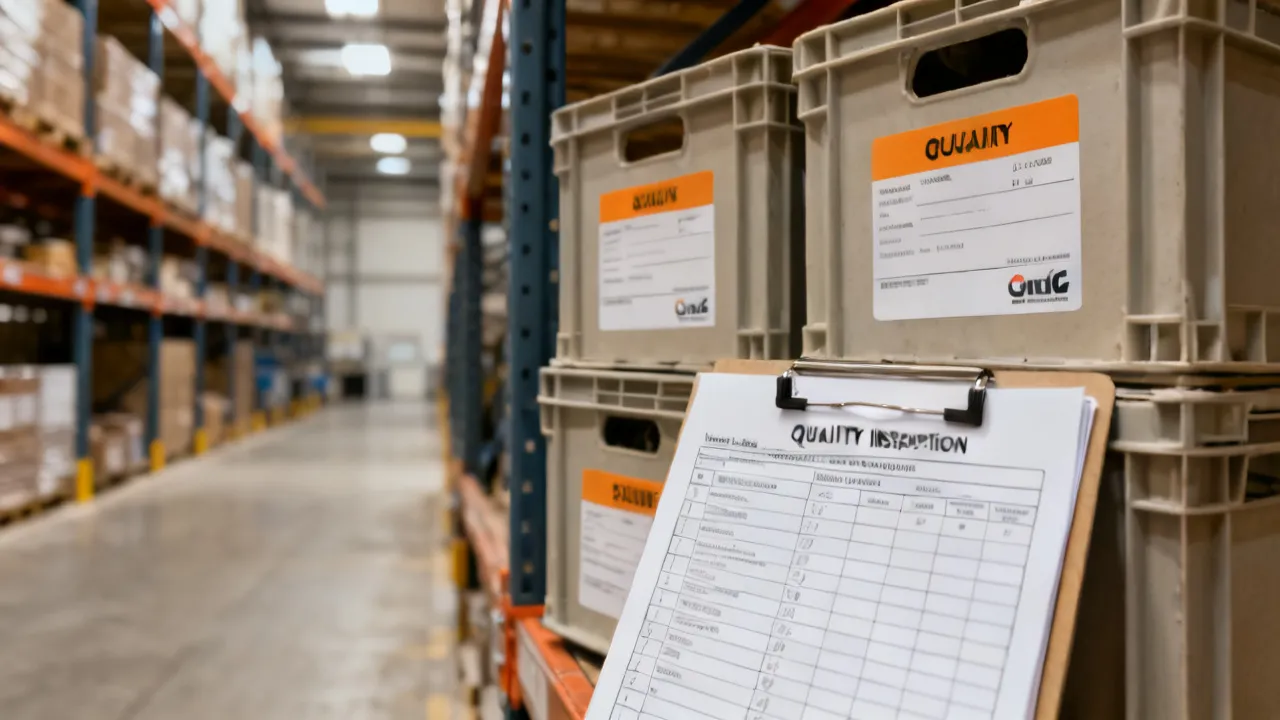
- Quality assurance: planned inspections, acceptance criteria, and corrective/preventive actions
- Traceability: ability to map finished goods to production records and tests
- Document integrity: consistent templates and version control for certificates and reports
Because the provided prompt includes “supplier details” but no specific supplier name or location string, this article focuses on the evaluation logic rather than a particular company. The core principle remains the same: you must be able to verify claims through documentation that aligns to the cited item identifier 16121978.
Supplier evaluation should be approached in layers. At a minimum, you should check whether the supplier can support your acceptance and audit needs. If your environment requires formal compliance, such as ISO-based quality systems or regulated testing, the evaluation becomes more structured and may include:
- Quality management system: whether the supplier maintains a documented quality system with controlled procedures for nonconforming product handling.
- Calibration and measurement control: whether test equipment is calibrated and controlled (and whether calibration status is traceable).
- Control of nonconformities: whether the supplier investigates root causes and prevents recurrence using documented CAPA processes.
- Change management: whether the supplier notifies customers about process/material changes that could affect the spec tied to 16121978.
- Training and competence: whether operators and inspectors follow controlled instructions that ensure consistent outcomes.
Operational evidence is often more reliable than marketing assurances. Examples of operational evidence include samples of completed certificates, redacted inspection logs (with relevant data preserved), evidence of internal audits, and documented procedures that show how traceability is established.
To test whether the supplier can actually deliver what they claim, ask scenario-based questions:
- “If a batch fails acceptance criteria, what is your containment and correction process?”
- “How do you prevent mix-ups when multiple revisions exist?”
- “Can you provide a sample shipment packet showing how 16121978 is reflected in the paperwork and labels?”
These questions force the supplier to demonstrate operational knowledge rather than just providing high-level statements.
In addition, pay attention to the supplier’s responsiveness and clarity. If they respond with generic documents that do not reference the identifier 16121978, that is a warning sign. Strong suppliers align documents to part numbers, revisions, and shipment quantities without ambiguity.
5) Handling ambiguity in listing text (including placeholder keyword fragments)
Your prompt includes sequences that resemble ‘ ’ repeated multiple times. In real procurement systems, placeholder or empty tokens can appear due to template errors, OCR extraction issues, or manual copy edits. Ambiguity in naming can cause mismatches in purchasing—especially when similar products differ by materials, dimensions, tolerances, or revision levels.
An objective way to reduce this risk is to require:
- Exact product description: the supplier should state the full spec and revision level that corresponds to 16121978.
- Technical data sheet: with revision date and measurable parameters.
- Labeling evidence: confirmation of how the identifier is printed/attached on packaging or units.
- Batch linkage: proof that batch/lot records can be provided for the shipped quantity.
Ambiguous listing text can create several failure modes:
- Spec drift: you might order an item that seems “close enough” but is actually a different material grade or tolerance range.
- Revision confusion: older revisions might be substituted if the listing does not clearly indicate the latest revision level.
- Packaging mismatch: the quantity might be correct, but packaging format could be wrong (e.g., lacking moisture barrier, missing labeling, insufficient protective packaging).
- Documentation mismatch: certificates might be produced generically without referencing your exact identifier or shipment batch.
To counter these failure modes, you should treat ambiguous listing text as an indicator to strengthen the proof. In other words, the ambiguity does not automatically mean “bad supplier,” but it does mean you need more verification before ordering. This is especially true if the placeholder fragments ‘ ’ appear in fields that could correspond to critical parameters.
Practically, when you talk to the supplier, you should avoid asking open-ended questions like “Is it the same?” Instead, request a specific mapping. For example:
- “Please restate the full item description exactly as it will appear on the packing list and certificate of conformity, and confirm that it matches the internal reference 16121978.”
- “If the listing text includes ‘ ’ placeholders, please provide the missing fields (spec, grade, dimensions, revision, and any relevant compliance test references).”
- “Confirm whether any substitutions are allowed between production lots or revisions, and if substitutions occur, require prior approval.”
If the supplier cannot provide these clarifications, you might consider alternative sources or impose contractual requirements that bind them to the exact spec. In high-consequence applications (where a small spec difference causes malfunction), ambiguous listing text can justify delaying procurement until clarity is resolved.
Another tactic is to use your internal engineering or receiving team. If you have access to part numbers, engineering drawings, or required standards, you can compare supplier claims to your internal reference documents. Even if the listing text is messy, technical documents can still be checked line-by-line.
6) A practical comparison mindset: value, risk, and certainty
Industry buyers often evaluate not just “lowest price,” but “lowest expected total cost” under realistic assumptions. This includes risk costs—such as rework, returns, delayed production, and compliance overhead—if the delivered goods do not match the intended spec tied to 16121978.
So, when comparing supplier options, you should weigh:
- Value: alignment between quotation scope and your real requirements
- Risk: likelihood of nonconformance due to unclear item definition
- Certainty: quality documentation completeness and consistency
- Responsiveness: speed and clarity of supplier communication
This approach is consistent with broadly accepted procurement risk management frameworks used across manufacturing and regulated industries. For deeper background, many organizations align these concepts with quality management principles such as those described in ISO 9001:2015 (quality management systems) and related compliance guidance.
To make “risk” tangible, consider what can go wrong. With ambiguous listing text and placeholder fragments ‘ ’, the most likely risks include:
- Receiving delays: if your receiving inspection cannot verify the spec or lacks certificates, the shipment might be quarantined.
- Acceptance failure: if tests fail or physical characteristics do not match your requirements.
- Operational downtime: if parts are installed and later found incompatible.
- Quality system disruption: if audits require evidence tied to specific batch records and those records cannot be provided.
“Certainty” can be evaluated by examining how well the supplier’s documents map to your needs. For example, if certificates reference the correct identifier 16121978, specify the revision, show test methods, and match the shipment quantity and batch/lot, then certainty increases. If documents are generic, missing revision references, or do not correspond to shipment batch, certainty decreases.
“Value” can also mean responsiveness. A supplier who can quickly correct a documentation error might save you far more than the difference between two unit prices. The ability to handle changes, respond to nonconformities, and provide traceability efficiently reduces total cost of ownership.
In practice, you can quantify this mindset using a simple scoring model. Assign weights to the criteria:
- Price (lower weight if risk is high)
- Document completeness
- Traceability readiness
- Lead time reliability
- Change control maturity
This provides an objective comparison even when listing information is incomplete or ambiguous.
Importantly, the objective is not to eliminate all uncertainty. It’s to reduce uncertainty to an acceptable level by using verification steps and contractual controls. When you can tie the product delivered to 16121978 and require documentation that matches, you transform uncertain listing data into controlled procurement decisions.
7) Where to place “documentation” in your decision
Documentation should not be an afterthought. A common failure mode is ordering before verifying whether documentation supports the exact item and quantity. Objectively, the supplier should provide documentation that is:
- Specific to the product: referencing the relevant identifier (e.g., 16121978)
- Consistent in scope: matching what the quote implies
- Timely: provided before shipment when needed for acceptance
- Audit-friendly: signed/authorized where required
If the listing includes multiple keyword fragments that appear incomplete (such as ‘ ’), documentation becomes even more important because it compensates for missing naming clarity.
To operationalize “documentation,” you should define which documents are required and how they will be used. For example, receiving might require:
- Certificate of conformity or certificate of analysis (depending on the product type)
- Inspection report (including pass/fail criteria, test methods, and results)
- Material certificates (if applicable, such as alloy certs for metals)
- Dimensional inspection summary (with tolerances)
- Batch/lot traceability information that maps to the delivered units
- Packaging/labeling details, including what is printed on labels
In addition, you should specify what constitutes acceptable documentation. For instance, if your quality team requires that certificates show revision level, then certificates missing revision references are not acceptable, even if the rest of the content looks correct. Similarly, if you need the documentation to reference 16121978 explicitly, you should reject certificates that reference only a different internal code without mapping.
Some suppliers may provide documentation after shipment. If that is acceptable for your operations, you can allow it; otherwise, require pre-shipment documentation. If you need to ensure compliance before parts enter your production line, you should set a requirement for documentation delivery prior to shipment or at least prior to receipt in your facility.
Documentation is also where you check whether the supplier’s processes match the listing. For example, if the listing text includes placeholder fragments ‘ ’, you may find in documents that the actual spec is complete—this is fine. But if documents are equally incomplete, it suggests a systemic issue in catalog data or quality document control.
Finally, treat documentation as part of the contractual agreement. If the documents are not delivered as required, you might have contractual rights to delay payment, refuse acceptance, or require reissue of certificates. This is more effective than informal negotiation after delivery.
8) Step-by-step procurement workflow (industry-standard)
Below is a condensed workflow that procurement teams commonly use to keep decisions objective and repeatable. Replace the generic placeholders with your own internal requirements tied to the identifier 16121978 and the provided price quote.
- Confirm the item identity: ask the supplier to confirm that the item described in the quote matches the product referenced by 16121978.
- Request technical verification documents: technical data sheet and any relevant certificates or inspection plans.
- Validate scope of price: confirm what is included (packaging, documentation, inspection evidence, lead time basis).
- Assess supplier capabilities: review quality management approach and traceability evidence.
- Define acceptance criteria: align internal receiving checks with supplier’s documented acceptance thresholds.
- Plan for traceability: ensure that batch/lot records and packaging labeling will be provided for the shipped quantity.
- Place a controlled order: start with a sample or pilot batch if your risk tolerance requires it.
- Receive and verify: conduct receiving inspection against documented requirements; record outcomes.
- Close the loop: if discrepancies occur, require corrective action and prevent recurrence.
To make the workflow more robust, consider adding explicit “verification gates.” A verification gate is a step where you pause purchasing progress until evidence is received. Example gates:
- Gate 1 (Identity gate): do not proceed to PO creation until supplier confirms the mapping between 16121978 and the exact spec/revision.
- Gate 2 (Documentation gate): do not accept shipment until certificates/inspection documents include the correct identifier and shipment/batch information.
- Gate 3 (Traceability gate): do not clear inventory until you can link delivered units to batch records for the received quantity.
This ensures that ambiguous listing content—especially placeholder fragments like ‘ ’—does not lead to an uncontrolled commitment.
Additionally, procurement teams often create a “right-first-time” purchasing package. This package includes the approved spec, acceptance criteria, document list, and labeling requirements. It reduces miscommunication and helps receiving and quality teams process shipments quickly.
When you enforce these gates, you shift procurement from a purely transactional approach (buying what’s listed) to a controlled approach (buying what’s verified). This is especially important when the listing itself is not fully reliable due to formatting issues.
9) Comparison table, sources, conditions, and requirements
The table below compares evaluation elements you should require. It does not contain links and is designed to be used as a checklist when the listing includes identifiers like 16121978 and uncertain text tokens (e.g., ‘ ’).
| Evaluation Element | What to Expect from a Strong Supplier | What to Request for Verification | Conditions/Requirements |
|---|---|---|---|
| Item identity | Clear product definition mapped to 16121978 | Confirmed spec statement; revision level; item master mapping | Must match quote description exactly before purchase |
| Quality documentation | Consistent certificates/inspection evidence for the delivered goods | Inspection report template; certificate of conformity; test summaries | Provide per shipment or per batch as required |
| Traceability | Ability to trace shipped units back to production records | Batch/lot record excerpts; labeling/pack trace proof | Required if your use case needs audit-ready records |
| Price transparency | Clarity on what the price includes | Line-item breakdown; terms of delivery; acceptance/document scope | Confirm pack size and quantity mapping to the quote |
| Operational reliability | Realistic lead-time commitments and responsive communication | Lead-time basis; escalation contacts; change notification process | Important for time-sensitive production cycles |
| Risk management | Defined handling of nonconformities | Corrective and preventive action approach; returns/rework policy | Must be agreed before the order is finalized |
Sources (reliability basis): This guidance is aligned with widely used quality management concepts such as those described in ISO 9001:2015 (quality management systems) and general procurement risk control approaches commonly referenced in quality and supplier management literature. For performance metrics in quality systems, buyers typically rely on internal records and supplier-provided evidence rather than unverifiable marketing claims.
To further strengthen the checklist, you can add “data quality checks.” These are particularly relevant when listing text includes placeholder fragments ‘ ’:
- Catalog data completeness check: verify that all spec-critical fields exist (material grade, dimensions, revision level, tolerances, compliance test references).
- Consistency check: ensure that the item description in the quote matches the description in the packing list template and certificate fields.
- Identifier consistency check: ensure 16121978 appears consistently or is mapped clearly across documents.
When you conduct these checks, you reduce the chance that “pretty pricing” leads to an “unpretty” receiving outcome.
10) Expert perspective: why “natural language listing text” matters
In many procurement workflows, listings are not created as formal technical records; they’re often a mixture of product marketing and catalog data. The more the listing uses partial or placeholder segments (as suggested by repeated ‘ ’ in the prompt), the more you should treat the text as preliminary until confirmed by technical documents.
From an industry expert’s standpoint, the goal is to prevent “spec drift”—the situation where the ordered items gradually diverge from what engineering expects due to unclear descriptions. Linking the description to 16121978 and demanding corroborating data reduces this drift.
There is also a communication layer to consider. Natural language listings can be interpreted differently by different stakeholders: procurement may focus on unit price and availability, while engineering may focus on tolerances and revision. If the listing is ambiguous, these stakeholders may reach different conclusions about what is being purchased.
To address this, experts recommend converting natural language descriptions into structured purchase requirements:
- Convert item identity into a clear “spec + revision + identifier mapping” statement.
- Convert quality requirements into “document list + acceptance criteria” language.
- Convert shipment expectations into “labeling + traceability + packaging format” requirements.
This conversion matters because natural language text can hide missing fields. Placeholder fragments like ‘ ’ suggest that something may have been omitted unintentionally, or that the listing extraction process failed. Either way, you should not treat it as complete information.
Another expert perspective is to consider the supplier’s data governance. Suppliers with mature systems typically maintain clean product catalogs. When they have multiple revisions, they usually control them, and they provide documents that precisely align with revision and batch. If the supplier’s listing appears to have missing tokens, you should ask whether their internal systems have version control and whether they can provide correct documentation for the specific revision tied to 16121978.
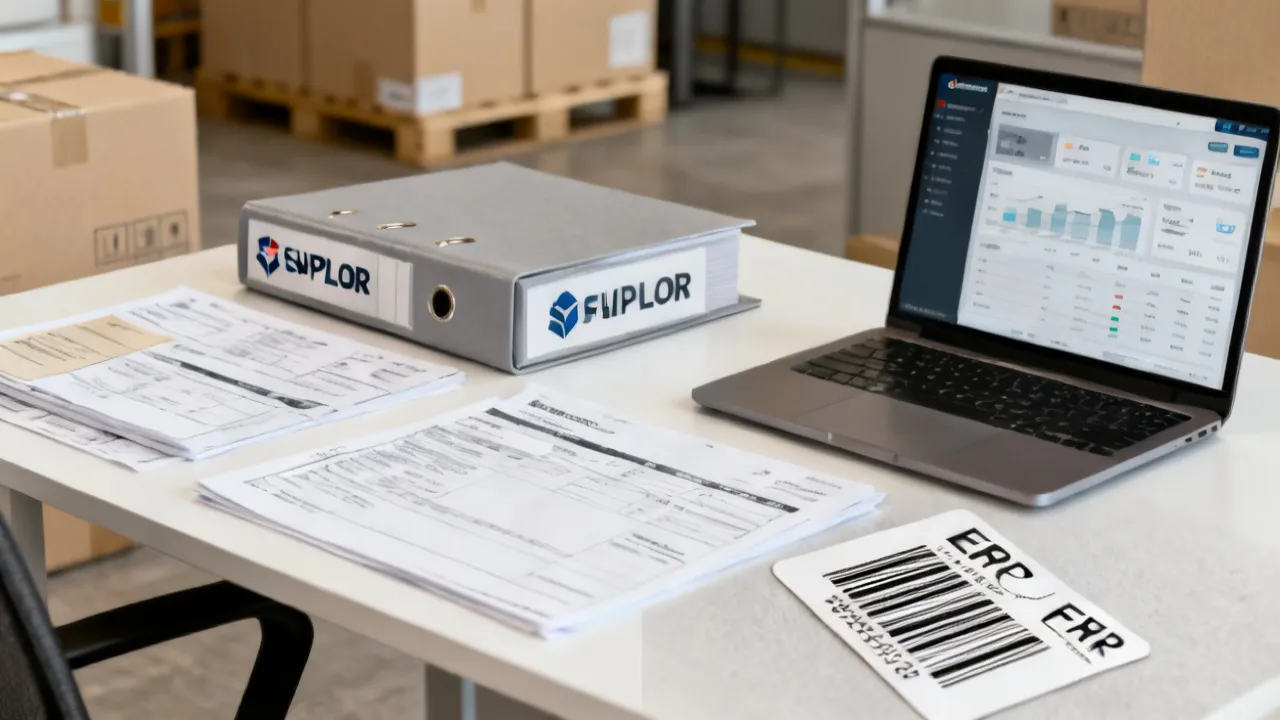
In practice, you can test data governance by requesting a “document packet” for a recent shipment. Ask for:
- Packing list showing item identity and quantity
- Certificate of conformity referencing the identifier and/or revision
- Any inspection report indicating batch/lot traceability
- Labeling examples showing how identifiers appear on cartons or units
If the supplier provides these documents with clear identifier mapping, then the missing ‘ ’ fragments in the listing likely do not reflect an underlying data/control failure. If they cannot, it suggests that natural language listing text may be the least reliable part of the process.
Spec drift prevention is not only about preventing wrong parts. It’s also about ensuring that you can support future audit needs. When you can tie purchases to 16121978 and to batch-specific evidence, it becomes easier to investigate issues later—such as performance failures, customer complaints, or compliance investigations. Without that evidence, you might be forced into guesswork, which is expensive and risky.
11) FAQs
FAQ 1: What does 16121978 mean in a listing?
Most commonly, 16121978 functions as an internal reference used to identify a specific item or record in a product catalog. The critical question is whether the supplier can map 16121978 to the exact technical specification and to traceable production or batch documentation for the goods you receive.
In other words, treat 16121978 as a starting reference, not as proof. Ask the supplier to provide evidence that the physical goods and the paperwork correspond to that identifier, including revision level and batch/lot linkage.
FAQ 2: How should I assess price information when the listing text is unclear?
Treat price as incomplete until you confirm what it includes—pack size, quantity mapping, documentation scope, inspection evidence, and logistics terms. Ask the supplier to restate the quote with explicit alignment to 16121978 and provide a line-item breakdown where possible.
If the listing includes placeholder-like fragments such as ‘ ’, request missing fields. For price assessment, the key is to ensure that your quoted unit price corresponds to your intended unit definition and includes the document scope needed for acceptance.
FAQ 3: The supplier provided “supplier details,” but not a full specification—what should I do?
Request a technical data sheet and a written confirmation that the cited product corresponds exactly to 16121978. If the supplier cannot provide measurable parameters or revision level, consider delaying procurement until the spec is verifiable.
Also ask how they handle substitutions. If they ship equivalent items without notifying you, this can undermine traceability and acceptance. A strong supplier will avoid substitutions or will manage them through a formal change control process.
FAQ 4: Are keyword fragments like ‘ ’ meaningful or can they be ignored?
When fragments appear as empty or placeholder-like tokens (such as the repeated ‘ ’ in your prompt), assume they may reflect data-entry or extraction issues rather than meaningful technical distinctions. Verification should rely on technical documentation tied to 16121978, not on incomplete keyword text.
However, don’t assume placeholders are harmless. If those fields would normally include spec-critical information (dimensions, material grade, compliance test IDs), then the placeholder could indicate missing critical details. In that case, you must request the missing information before ordering.
FAQ 5: What documentation should I ask for before ordering?
At minimum, ask for a technical data sheet, quality/inspection evidence appropriate to your application, and proof of traceability linkage for the shipment. If your acceptance process is strict, align receiving checks to the supplier’s documented acceptance criteria and ensure documentation is provided per shipment or per batch.
To be precise, create a document list that includes identifiers and revision references. For example, request certificates that reference 16121978 (or provide a mapping statement if they use an internal part number). If you need audit-ready evidence, require batch/lot records or excerpts that tie to shipped quantities.
FAQ 6: How do I reduce the risk of receiving the wrong item?
Require that the supplier confirms the item identity mapped to 16121978, and insist on consistent labeling. When feasible, start with a controlled sample or pilot batch, then perform receiving inspection against documented requirements before scaling procurement.
You can further reduce risk by requiring that packing lists and certificates match your PO line items exactly. If you have internal engineering acceptance checks, ensure those checks are planned before goods arrive, so you don’t accept based solely on visual similarity.
12) Conclusion: make the decision verifiable
Evaluating product listings and suppliers becomes far more objective when you anchor decisions to traceable identifiers such as 16121978, clarify the scope behind price information, and require documentation that matches the exact product definition. When listings include ambiguous or placeholder-like keyword segments (e.g., repeated ‘ ’), treat the narrative as preliminary and rely on verifiable technical and quality evidence to protect downstream operations.
The most effective procurement approach is not to “trust the listing,” but to convert listing information into controlled requirements. That means demanding clarity on item identity, ensuring documentation specificity and completeness, confirming traceability to the shipped quantity, and aligning acceptance criteria with documented inspection thresholds. If you do these steps consistently, you transform uncertain catalog text into a reliable purchasing decision.
If you share the real-world “price information” line items, supplier name, and the exact product description that corresponds to 16121978, I can help you draft a procurement checklist tailored to your use case and acceptance criteria.
-
1

A Guide to Cost-Efficient Small Electric Cars for Seniors
-
2
Mastering Debt Consolidation: Boost Your Credit Score and Manage Interest Rates
-
3
Your Guide to Loans, Credit Checks, and Interest Rates
-
4
Affordable Independent Living: Finding the Right Senior Housing
-
5
Guide to Senior Living Apartments: Affordable and Comfortable Environments