Understanding 1993-Appearing Industry Decisions and Sourcing
This guide explains how to interpret 1993-era decisions, sourcing choices, and supplier relationships using a disciplined research approach. It then provides objective background on common meanings of “1993” in records, the role of suppliers in quality assurance, and why later due diligence matters for procurement and compliance decisions. No claims are exaggerated; methods emphasize verifiable documentation.
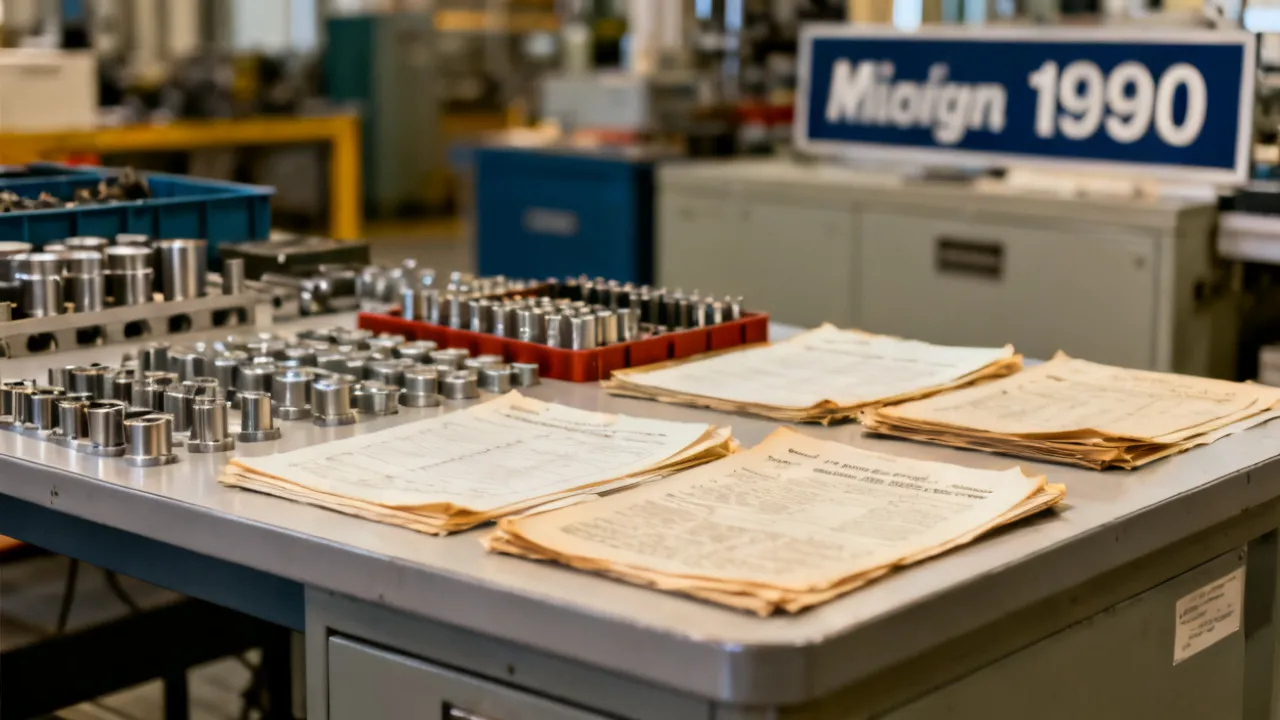
Critical overview: how “1993” signals sourcing, compliance, and traceability
When a process, record, or product description references 1993, it typically functions as a timestamp marker—often tied to development cycles, documentation archives, regulatory timelines, or the provenance of components and materials. In procurement and quality assurance contexts, that single year can carry practical implications: it may affect traceability, document availability, standards alignment, and the way a supplier demonstrates compliance for current audits.
From an industry-expert standpoint, the strongest way to use a “1993” reference is not to treat it as an automatic indicator of quality or obsolescence, but to treat it as a clue that should be verified against primary documentation (certificates, test reports, batch/lot records, and revision histories). In other words: “1993” is a starting point for evidence work—not an endpoint.
To make that starting point operational, teams should ask: What exactly does “1993” label? A drawing revision? A certification date? A manufacturing window? An internal archive code? A standard version? A training record completion? A calibration interval start? Each possibility implies a different chain of evidence—and a different compliance risk if interpreted incorrectly.
What “1993” often represents in technical and commercial records
In many industries—ranging from manufacturing and electronics to pharmaceuticals logistics and industrial equipment—1993 appears as a reference year in three common ways:
- Design or specification milestone: the year a specification was first drafted, approved, or revised.
- Manufacturing or procurement origin: the year a component was produced, acquired, or integrated into a system.
- Regulatory/documentation timing: the year a standard, procedure, or compliance workflow was established.
Because these usages vary, the same year can mean different things for different supply chains. Objective due diligence therefore requires you to confirm what exactly the year refers to in the document trail—specification date, production date, certification date, or record-creation date.
In practice, “1993” can show up on documents in ways that look superficially similar but behave differently during audits. For example:
- A “1993” printed on a historical drawing might indicate the initial release of the design, but not the revision level relevant to today’s production.
- A “1993” on a certificate might represent when the certificate was generated, but the underlying test might have occurred on a later date.
- A “1993” in a document index or archive catalog might merely indicate the year the record was filed, not the year the test was performed.
- A “1993” embedded in a compliance narrative might refer to a standard version, but that standard may have been superseded by later editions.
Therefore, teams should avoid treating “1993” as a single-dimensional signal. Instead, “1993” should be treated as a metadata anchor that helps you locate the relevant evidence. Once located, you must verify whether that evidence is still applicable to the configuration being evaluated.
How supplier details connect to quality: the “chain of custody” perspective
Procurement decisions do not rest solely on supplier names or supplier lists. In mature supply chains, the practical value of “supplier details” lies in how they enable verification: who performed the work, under what controlled process, with what test method, and with what documentation retained. Even when records include a year such as 1993, auditors and technical reviewers often look for evidence that:
- Specifications were controlled: revision levels are documented and consistent.
- Testing is methodologically traceable: test procedures match the claims made.
- Lot/batch linkages exist: the item you received can be tied to the records you rely upon.
- Changes are governed: any redesign, requalification, or substitution is documented.
This approach aligns with widely used management-system expectations for record control and traceability. For background context on quality management principles, the ISO 9001 family of standards is commonly referenced in industry audits; ISO 9001 emphasizes process control, documentation practices, and continual improvement (see ISO’s official materials for scope and requirements).
However, even within ISO 9001-type frameworks, “traceability” is not a generic label. It is a capability that must connect specific delivered units to specific supporting records. If “1993” appears in a supplier narrative but does not allow mapping to the delivered unit’s serial/lot identifiers, then traceability remains incomplete.
Why location cues matter—even when the keyword doesn’t specify a city
You asked that any appearance of a city/country placeholder be replaced with "nearby." In the practical sense, “nearby” functions like a locality cue without overcommitting to a specific place. For sourcing, that distinction matters: local suppliers may offer shorter lead times and easier on-site verification, while non-local suppliers may require stronger document-based assurance and shipping-chain controls. When location is only indicated as “nearby,” it becomes even more important to rely on verifiable evidence rather than assumptions about geography.
Location cues influence compliance in multiple ways:
- Logistics and custody: distance can increase handling steps, storage durations, and opportunities for mix-ups.
- Environmental storage controls: certain materials require temperature/humidity controls during storage and transit.
- Inspection feasibility: local providers may support on-site incoming inspection, while remote providers may require detailed inspection reports and photographs.
- Communication speed: rapid clarification of nonconformities can reduce the risk of prolonged use of questionable evidence.
Still, location should never replace documentation. “Nearby” can help you plan verification effort, but it cannot substitute for certificate validity, test record congruence, and revision-controlled traceability.
Due diligence mindset: treat “1993” as an evidence key
As an industry expert, I recommend a disciplined reading strategy for records that mention 1993 and “supplier details.” Instead of asking, “What does 1993 prove?” ask:
- What artifact contains the year? (spec sheet, drawing revision, certificate, audit report, maintenance manual)
- What is the artifact’s revision context? (initial release vs. later reissue vs. archival reference)
- What is the supplier’s role? (manufacturer, distributor, testing lab, integrator)
- What evidence ties to the delivered unit? (serial/lot matching, inspection records, acceptance criteria)
That shift—from interpreting a year to verifying its meaning—reduces risk of misclassification and helps you build an audit-ready justification.
To make this practical, think of each supplier document as an “evidence container” with an internal structure. The year is one label on the container; the real question is whether the container is sealed, intact, and relevant to the part number and revision of what you actually received.
Industry context and authoritative background (objective)
Quality management and supply chain traceability practices exist to reduce variability and ensure that products and services meet stated requirements. The need is widely recognized across regulated and non-regulated sectors. For example, internationally recognized quality management frameworks (such as ISO 9001) provide structure for document control and process management. Additionally, many industries rely on standard traceability concepts: controlling documents, recording inspections, and ensuring that delivered items can be linked to production and testing evidence.
From a sourcing perspective, “supplier details” usually matter because suppliers are not interchangeable by default. Even if two suppliers offer nominally similar items, differences in manufacturing methods, quality controls, and record retention can affect compliance outcomes. Therefore, the presence of a timestamp like 1993 should be interpreted as a historical anchor that may require verification of current relevance—especially if standards or testing methods have evolved since that period.
It is common for teams to underestimate how much technology and regulatory expectations can change over decades. Even if an item was produced long ago, the present-day evaluation might involve requirements that were not fully formed in 1993. Similarly, even if the product itself is unchanged, testing methods may have been updated, and acceptance criteria may have been refined. That is why the evidence work should always include a comparability check—are the test methods and criteria consistent with what the receiving organization requires today?
Step-by-step guide, comparison conditions, and requirements (supplemental)
Below is a supplemental section you can use to standardize how you interpret a record that references 1993 alongside supplier-related information. This is designed to be practical, comparison-oriented, and auditable. (No links are provided.)
Comparison table: evidence strength vs. risk level
| Evidence item to check | What “1993” might indicate | Stronger confirmation looks like… | Higher risk looks like… |
|---|---|---|---|
| Document date vs. revision date | Archival reference, original spec, or later reissue | Clear revision history showing what changed and when | Only a single year with no revision context |
| Supplier role clarity | Manufacturer history or third-party handling timeline | Document explicitly states manufacturing vs. distribution vs. testing responsibilities | Unclear roles or generic “provided by” statements |
| Test and inspection records | Testing protocol from an earlier period | Test reports reference the applicable method and acceptance criteria | Test reports that do not match the product configuration |
| Traceability (serial/lot) | Production timeframe alignment | Lot/batch linkage tied to the received units | No way to map delivered units to the archived evidence |
| Compliance statements | Potential standards lineage from that era | Compliance claims supported by current documentation and scope | Compliance claims that cite old standards without explaining applicability |
Conditions and requirements checklist
- Source documents: Use primary documents when possible (certificates, test reports, revision histories, inspection logs).
- Traceability requirement: Confirm that delivered items can be linked to the relevant records.
- Revision control: Ensure the “1993” reference corresponds to the intended artifact and revision level.
- Supplier confirmation: Confirm the supplier’s role in producing, testing, or distributing the item.
- Applicability review: Determine whether older evidence remains valid under current requirements.
Step-by-step guide (practical workflow)
- Identify the artifact: Locate the exact document or record where 1993 appears.
- Interpret the reference type: Determine whether “1993” denotes approval, production origin, or archival context.
- Verify revision history: Check if the referenced document has controlled revision levels.
- Confirm supplier responsibilities: Obtain statements or documentation that clarify manufacturer vs. distributor vs. test lab roles.
- Request traceability evidence: Ask for lot/batch mapping to the specific units received.
- Evaluate test method alignment: Confirm that tests use methods and acceptance criteria consistent with current requirements.
- Document your decision: Record why the evidence is acceptable (or why it is insufficient) for your internal approval process.
Deepening the analysis: how auditors and reviewers typically “stress test” evidence
When a reviewer sees 1993 in a document package, they often apply additional scrutiny, not because the year is inherently suspicious, but because long time gaps and archival references increase the likelihood of mismatch. A “stress test” is essentially a set of sanity checks that challenge whether the evidence is coherent as a system.
Consider common stress-test questions that show up in real audit settings:
- Coherence across documents: Does the drawing revision match the part number referenced in the certificate and the inspection report?
- Coherence across time: Do the test dates, certificate dates, and shipment dates logically align with the described manufacturing timeframe?
- Coherence across roles: If the supplier claims “manufactured by” but the document looks like distributor documentation, can the discrepancy be resolved?
- Coherence across traceability: Do the serial numbers or lots listed on inspection records match the labels on the received units?
- Coherence with acceptance criteria: Do the results (values, pass/fail statements) align with the correct specification revision?
If any one of those coherence checks fails, the risk level rises. Importantly, the failure might not be about the year itself; it might be about missing linkages. “1993” may only be the first thing the reviewer noticed, while the real issue is that the evidence package does not connect tightly enough to the delivered configuration.
What to request when the evidence is incomplete or ambiguous
In real sourcing and compliance workflows, you often receive documents that partially answer the question but not completely. When that happens, teams should request targeted clarifications rather than broad “send everything” requests. Evidence requests should be phrased to identify gaps related to “1993.”
Examples of targeted requests include:
- Clarify the meaning of “1993” within the document: is it an approval date, production year, archive year, or revision release?
- Provide revision history from the referenced spec/drawing so the receiver can confirm which revision level applies to the received units.
- Provide batch/lot traceability that maps delivered serial numbers to manufacturing records and inspection results.
- Provide test methods and acceptance criteria referenced by the test reports, not only raw results.
- Provide role statements (manufacturer vs. distributor vs. test lab) and responsibilities for each part of the compliance package.
- Provide applicability statement explaining whether older test standards remain valid under current requirements or if re-testing/re-evaluation occurred.
This approach helps suppliers respond with the precise material auditors expect, and it prevents you from relying on assumptions or incomplete interpretations of “1993.”
Common pitfalls: how “1993” can mislead procurement teams
Although a year reference can be a valuable clue, it can also mislead when teams make shortcuts. Below are typical pitfalls that occur when procurement and quality teams interpret evidence too quickly.
Pitfall 1: confusing archival date with production date
A document might show 1993 as the year it was filed or archived. A team could mistakenly treat it as the manufacturing year. If traceability ties to a different production window, the inference fails. The result can be a flawed risk assessment—particularly for items sensitive to aging, shelf-life, or time-dependent degradation.
Pitfall 2: assuming “old” means “obsolete” or “safe”
Some organizations jump to extremes:
- One side assumes that if it is old (e.g., from 1993), it must be obsolete or noncompliant.
- The other side assumes that if it is old, it must be “proven” or “tested thoroughly long ago.”
Both extremes are risky. The correct assessment is evidence-based: what was produced, what tests were performed, whether those tests match the relevant requirements, and whether the delivered units can be mapped to the records.
Pitfall 3: mistaking compliance statements for compliance proof
A supplier might state “compliant with” a standard version that includes or references 1993. Compliance statements are not automatically equivalent to compliance proof. Proof requires scope clarity (which product, which revision, which configuration), plus supporting records that auditors can examine.
Pitfall 4: revision drift and part configuration mismatch
Over time, drawings and specifications evolve. A reference to a 1993 specification may not reflect later changes that affect test requirements. If the received units correspond to a later revision but the supplier provides evidence tied to an earlier revision, acceptance decisions may be invalid.
Pitfall 5: ignoring the supplier’s role in the evidence chain
Not every supplier is a manufacturer. Distributors, integrators, and test labs play different roles. A distributor might provide certificates created based on upstream data but may not hold manufacturing records. A test lab might produce test results but may not control the entire traceability chain. Procurement teams should map responsibilities accordingly.
How to evaluate traceability when “1993” is tied to lot/batch records
Traceability is central to compliance. When a year like 1993 is tied to lot or batch information, teams should evaluate traceability in two directions:
- Forward direction: does the lot/batch record indicate where the material/components came from, which processes were used, and which tests were performed?
- Backward direction: can the delivered units be identified as belonging to that lot/batch and be linked to the same test/inspection records?
In a robust evidence system, a serial/lot identifier functions like a key. The key should open the correct record set: manufacturing history, inspection results, and relevant certificates. If “1993” is the year attached to the record set, that is fine—but the mapping still must work.
Practical verification steps often include checking:
- Whether serial numbers or lot codes are printed on the unit packaging and align with receiving records.
- Whether the certificate lists the same lot/batch identifiers as the inspection report.
- Whether test reports reference the correct batch and part revision.
- Whether acceptance criteria are consistent with the correct specification version.
How “supplier details” should appear in credible documentation packages
Supplier details, when used effectively, usually appear in the documentation package as structured information rather than vague statements. A credible package often includes:
- Legal entity clarity: the supplier’s name exactly as it appears on contracts and purchase orders.
- Role labeling: manufacturer, distributor, integrator, testing laboratory, calibration provider, etc.
- Control evidence: references to procedures, traceability systems, calibration records, and inspection standards.
- Responsibility statements: who attests to compliance and under what authority.
- Document control metadata: revision level, document number, issue date, and sometimes document ownership.
If supplier details are present only as “provided by” or as an unstructured narrative, then even a well-meaning reference to 1993 might not be enough to support audit defensibility.
Document control: why revision context matters more than the year itself
Auditors care about revision control because it prevents confusion about what version of a requirement or design was used when tests were performed. Therefore, when a record references 1993, the primary question is not “What happened in 1993?” but “Which revision of the controlled document is referenced, and is that revision applicable to the delivered units?”
In practice, controlled documents can have several layers of history:
- Initial release (first approved version)
- Subsequent revisions (design improvements, specification updates)
- Re-issues (format changes, administrative updates)
- Corrigenda (minor corrections)
- Archival status (retired documents still referenced for legacy products)
When “1993” is associated with one of these layers, teams should verify which layer it is. A revision date could be different from an approval date, and a reissue could preserve an earlier technical content while changing administrative metadata. Without revision context, the year becomes ambiguous.
Test method alignment: connecting historical evidence to current expectations
One of the most important aspects of compliance work is ensuring that test methods match the claims. When historical evidence is involved—such as test reports referencing a standard version from around 1993—you must determine whether the methods remain valid for the configuration and requirements being evaluated.
Test method alignment includes:
- Method identity: the standard/method name and revision level.
- Test conditions: temperature, environment, sample preparation, measurement instruments, and tolerances.
- Instrument calibration: calibration status for instruments used during testing.
- Acceptance criteria: pass/fail thresholds that match the correct specification revision.
If the test method changed since 1993, you may need a comparability assessment or re-testing under the current method. If the supplier cannot demonstrate equivalence, the evidence might not be sufficient.
Handling “1993” in regulated vs. non-regulated sectors
Not every sector evaluates evidence with the same intensity. However, the traceability principles are broadly consistent. The difference is the level of formality expected in audits and the consequences of noncompliance.
In regulated sectors (for example, where safety, licensing, or patient-impact is involved), evidence packages tend to require:
- Defined document control practices
- Clear traceability mapping
- Retention of records for specified periods
- Strict control over changes and requalification
In non-regulated sectors, audits may still happen (e.g., customer audits, internal audits, or third-party assurance). Even without government regulation, strong quality systems still rely on revision control, traceability, and role clarity. “1993” can still be an evidence clue, but reviewers will typically expect evidence to be coherent and defensible.
Examples of interpretations (hypothetical scenarios)
The best way to avoid misinterpretation is to see how different “1993” placements change meaning. Below are hypothetical examples of how teams might encounter 1993 and what follow-up work becomes necessary.
Scenario A: “1993” appears on a drawing title block
A drawing for a component includes “1993” on the title block. The procurement team initially assumes it indicates the manufacturing year of the received items. After requesting traceability evidence, they discover the delivered items were manufactured decades later under a later drawing revision, while the “1993” reflects the design’s initial release date. In this scenario, the team should re-focus on the revision level applicable to the delivered items, not the initial release year.
Scenario B: “1993” appears on a compliance certificate
A certificate states compliance and references “1993” in a clause about the applicable standard edition. The team wants to verify whether that standard edition is still the required standard for the current procurement specification. If the organization has updated requirements since that time, the supplier may need to provide additional evidence: equivalency rationale, re-testing, or updated certification under the current scope.
Scenario C: “1993” appears in an archive index
A supplier provides an archive index showing “1993” as the filing year for a set of records. However, the index does not prove when the tests were performed. The team requests the test report itself, including its test date and lot identifiers. Once obtained, the team sees that tests were performed in a different year, and the archive index merely reflects record retention timing. This scenario illustrates why you should not confuse administrative storage metadata with technical testing metadata.
Scenario D: “1993” appears in a supplier’s narrative about process qualification
A supplier claims that their process was qualified in 1993 and remains valid. Auditors would typically request evidence that qualification remains applicable: maintenance of qualification status, periodic requalification (if required), record of process changes, and proof that current product batches are produced under controlled conditions consistent with the qualification claim.
Practical risk management: choosing acceptance vs. escalation when evidence references “1993”
Not every evidence package will be perfect. Procurement and quality teams must decide whether to accept, request additional information, or escalate. “1993” can be a factor in escalation planning because it can indicate older evidence, older standards, or archival references.
A practical risk management approach is to define evidence acceptance thresholds. For example:
- Acceptable: evidence package clearly maps to the delivered units, includes revision-controlled documents, provides test method and acceptance criteria, and includes traceability identifiers that match receiving records.
- Conditionally acceptable: evidence maps to units but test standards require clarification on applicability to current requirements; you can accept with a documented deviation or requirement for supplementary confirmation.
- Not acceptable: evidence does not map to units (no serial/lot linkage), revision context is missing, test methods do not match the configuration, or compliance statements are unsupported by primary records.
In each case, “1993” should be treated as a context clue to guide due diligence effort, not as a standalone pass/fail criterion.
How “nearby” location cues can affect verification planning
When location is only described as nearby, teams should still interpret it as a planning element rather than a proof. Verification planning might include:
- Inspection strategy: whether it is feasible to perform incoming inspection or sampling locally or whether you rely on supplier-provided inspection records.
- Sampling expectations: whether local receipt allows quick rework, re-inspection, or request for additional samples if discrepancies are found.
- Handling and packaging scrutiny: whether shipments are likely to encounter less transit time or fewer handling events (still needs evidence).
- Communication loops: ability to respond rapidly to nonconformities and obtain missing documents.
However, none of these planning elements can replace record-based traceability. A supplier’s ability to deliver quickly does not prove that the documents and tests correspond to your received units.
Integrating “1993” interpretation into internal procurement governance
Organizations that handle evidence consistently typically integrate interpretation steps into their internal governance. That means procurement checklists and quality review templates include explicit prompts for evidence meaning, not only for document presence.
An internal governance template can include fields such as:
- Year meaning: specify whether the year is a design release, production origin, test date, certificate date, or archive filing date.
- Revision mapping: confirm drawing/spec revision matches the delivered part configuration.
- Supplier role: confirm whether supplier is manufacturer/distributor/test lab and which documents correspond to which role.
- Traceability mapping: capture serial/lot identifiers and link them to batch records and inspection results.
- Test method applicability: verify that test methods and acceptance criteria align with current requirements or justify equivalence.
This structure prevents teams from treating “1993” as an unexamined fact. It also improves audit defensibility by demonstrating that decisions were evidence-based and repeatable.
FAQs
1) What does “1993” usually mean in procurement documents?
Very commonly, 1993 is a timestamp tied to a specification, design milestone, production timeframe, or documentation archive. Its meaning depends on the artifact and the revision context where it appears. It can represent initial release, test documentation era, filing date, or standard edition referenced for compliance.
2) Does a supplier detail guarantee quality?
No. Supplier details help you evaluate responsibility and enable verification, but quality assurance still depends on controlled documentation, traceability, and evidence such as test reports and inspection records.
3) How should I interpret “nearby” when no city or country is specified?
“Nearby” is top treated as a locality cue without assuming specifics. Operational decisions should be based on verifiable delivery terms, service capabilities, and documented quality processes rather than geography alone. Use it to plan verification effort (e.g., how quickly you can inspect or resolve issues), not to infer compliance.
4) What evidence should I request when the record references 1993?
Request revision histories, lot/batch traceability, inspection or acceptance records, and test reports that match the product configuration and the relevant acceptance criteria. Also clarify whether “1993” is a production year, certificate/test creation date, archive filing date, or standard edition referenced.
5) Can older evidence still be valid today?
It can be, but only if you confirm applicability under current requirements. You should evaluate whether standards, testing methods, and regulatory expectations have changed since the 1993 reference period. Validity often depends on whether the evidence is still within acceptance criteria and whether the configuration matches the referenced documentation.
6) Are there industry standards that support record control and traceability?
Quality management frameworks such as ISO 9001 emphasize process control, documentation, and continual improvement. Many industries adapt those principles to specific regulatory and technical contexts. For official requirements, consult the relevant ISO documentation and applicable sector standards.
7) What if the supplier provides only a year and no revision history?
If the supplier provides only 1993 with no revision context, you should treat the evidence as incomplete. Ask for the controlled document revision level, issuance/approval metadata, and any document control references (document number, change history, or revision status). Without revision context, traceability to current requirements cannot be confidently established.
8) How do I distinguish a “test date” from a “certificate issue date”?
Look for separate fields: “Test performed on,” “Test date,” “Certificate issue date,” “Date of certification,” and “Revision date.” If only one date appears, request clarification and underlying test records, including batch/lot identifiers. Auditors expect that the test date supports the certificate claims and that both align logically with the shipped units.
9) What should I do if traceability identifiers do not match between documents?
Do not proceed on assumptions. Request corrected documentation or a mapping explanation. For defensible decisions, the serial/lot identifiers on inspection records, certificates, and labels should correspond to the same units. If mapping cannot be established, the evidence package likely cannot support approval.
10) What is the best way to document my internal decision?
Record the artifact where 1993 appears, explain what the year represents (based on the supplier’s documentation and revision context), list the traceability evidence that links to received units, and note whether test methods and acceptance criteria match your current requirements. If you accept with conditions, document the condition and follow-up actions.
Conclusion: use “1993” to guide verification, not assumptions
In sourcing and compliance work, a year like 1993 is top treated as a verifiable evidence cue. The practical goal is to understand what the year refers to, how supplier responsibilities are defined, and whether traceability and controlled documentation support the item you are evaluating. When you apply a structured due diligence workflow—supported by revision control, traceability evidence, and supplier role clarity—you reduce uncertainty and make defensible decisions based on documentation rather than conjecture.
Ultimately, the safest operational principle is simple: treat 1993 as a locator for evidence, not as proof by itself. If the evidence package can be made coherent—connecting delivered units to the right revision-controlled documents, test methods, acceptance criteria, and traceability records—then the reference to 1993 becomes useful context. If not, then the reference becomes a warning sign that additional verification is required.
Reference note (for objectivity)
This article provides general guidance aligned with widely recognized quality management principles. For formal requirements and definitions, refer to ISO quality management documentation (e.g., ISO 9001) and any applicable industry or regulatory standards relevant to your specific product and jurisdiction.
-
1

A Guide to Cost-Efficient Small Electric Cars for Seniors
-
2
Mastering Debt Consolidation: Boost Your Credit Score and Manage Interest Rates
-
3
Your Guide to Loans, Credit Checks, and Interest Rates
-
4
Affordable Independent Living: Finding the Right Senior Housing
-
5
Guide to Senior Living Apartments: Affordable and Comfortable Environments